EVENT BOOKING | CONCEPTUAL | MOBILE APP
EVENT SPHERE
PROJECT TYPE
User Research and Product Design
PROJECT OVERVIEW
About Event Sphere
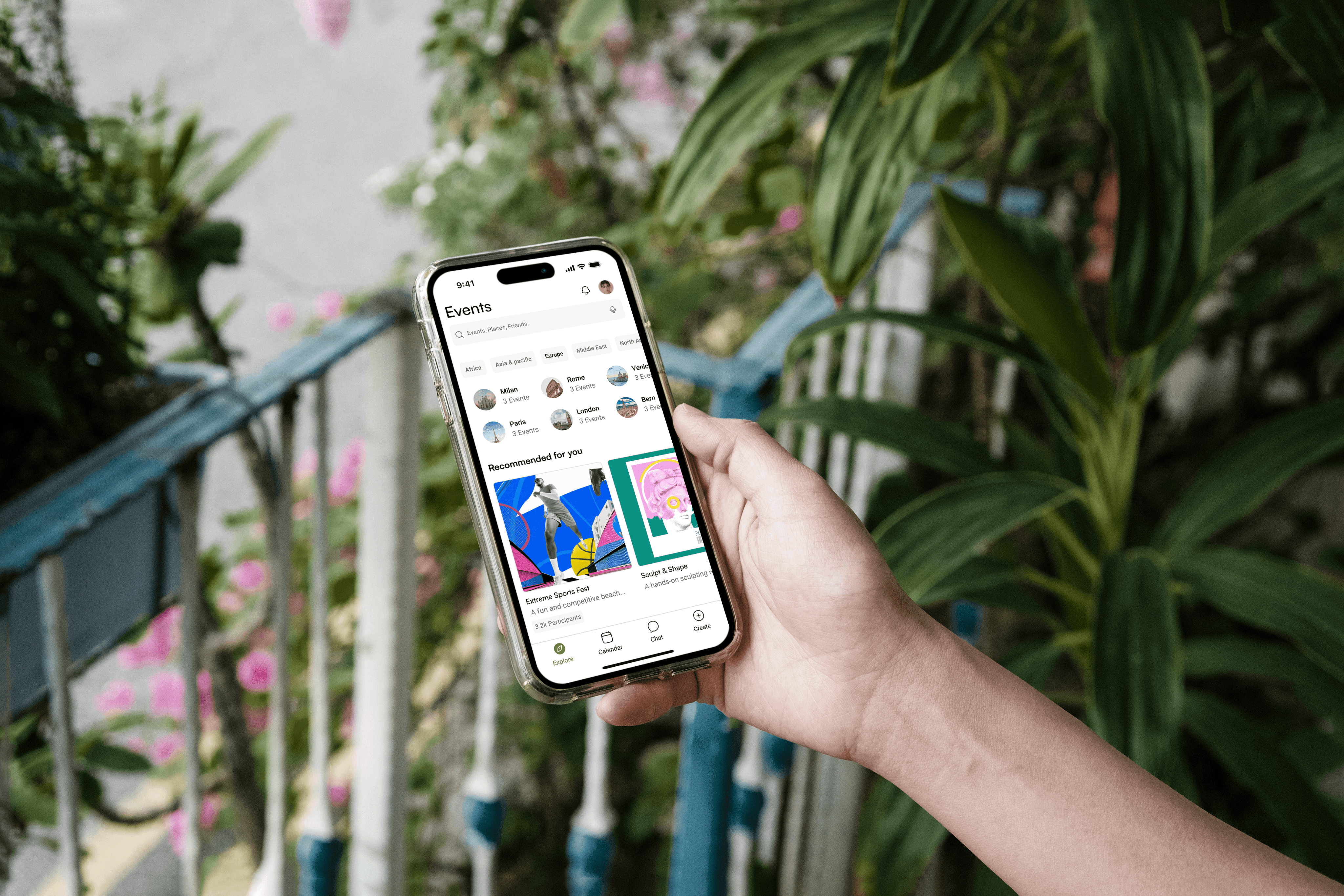
EventSphere is a mobile application I designed to revolutionize how people discover and host events worldwide. Unlike traditional platforms that prioritize large-scale events, EventSphere creates equal visibility for events of all sizes. The app enables users to create and discover events ranging from intimate gatherings to large conferences, with seamless communication between hosts and attendees. I emphasized inclusivity with built-in accessibility indicators for specially-abled participation.
Challenge
Current event platforms face critical issues:
Limited visibility for small events
Research shows 73% of events are small gatherings but receive only 12% of platform visibility. Users struggle to discover intimate local events.
Complex RSVP management
Current platforms have complicated processes leading to 40% abandonment rates. 47% of event planners cite inefficient tools as their biggest frustration.
Lack of direct communication
Attendees cannot easily contact organizers. This creates friction when users have questions about accessibility, parking, or special requests.
Accessibility information gaps
42% of attendees request accessibility information but only 15% of events provide it clearly.
Goals
To address these user challenges, my goal for this project was to:
Create equal visibility for events of all sizes, ensuring small gatherings receive the same discoverability as large conferences
Simplify event creation and RSVP management through an intuitive mobile-first interface that streamlines the hosting process
Enable direct host-attendee communication with built-in messaging features for questions, updates, and exceptional circumstances
Prioritize accessibility by providing clear indicators for specially-abled participation options on every event listing
Empower event organizers with full data ownership, no forced platform branding, instant payment access, and feature-complete native mobile apps for both iOS and Android
USERS RESEARCH
Hypothesis
I developed the following hypotheses during the user research stage for the EventSphere mobile application.
Hypothesis 1
Implementing a location-based discovery feed with equal algorithmic weight for all event sizes will increase small event attendance by 35% within 60 days.
Hypothesis 2
Adding in-app direct messaging between hosts and attendees will reduce event-related inquiries on external platforms by 50% and increase attendee satisfaction scores by 25%.
Hypothesis 3
Providing a one-click RSVP system with automated guest list management will decrease host setup time by 40% and reduce RSVP confusion by 60%.
Research methods
I employed secondary research including
Competitive Analysis: Analyzed Luma, Eventbrite, and Meetup through 500+ user reviews
Industry Reports: Event management market trends and attendee behavior studies
Published UX Research: Mobile app usage patterns and event discovery behaviors
Key findings
To address these user challenges, my goal for this project was to:
84% of attendees seek local independent venues over large commercial spaces
90% don't actively search for events, preferring discovery feeds
73% of events are small but get only 12% of visibility
68% consider mobile apps vital for event experiences
60% of event platforms report demand for simplified registration
47% of planners identify inefficient tools as main pain point
User personas
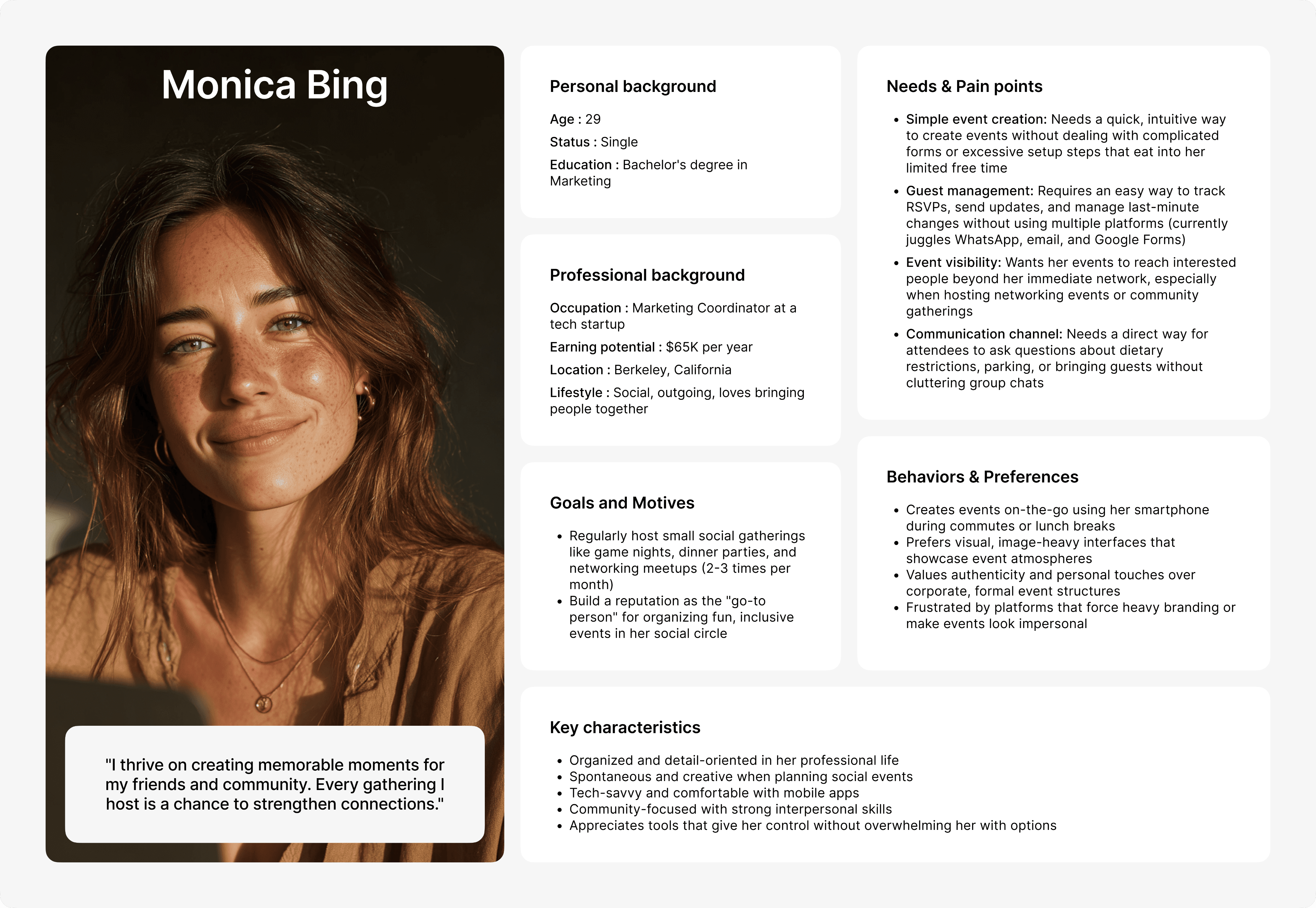
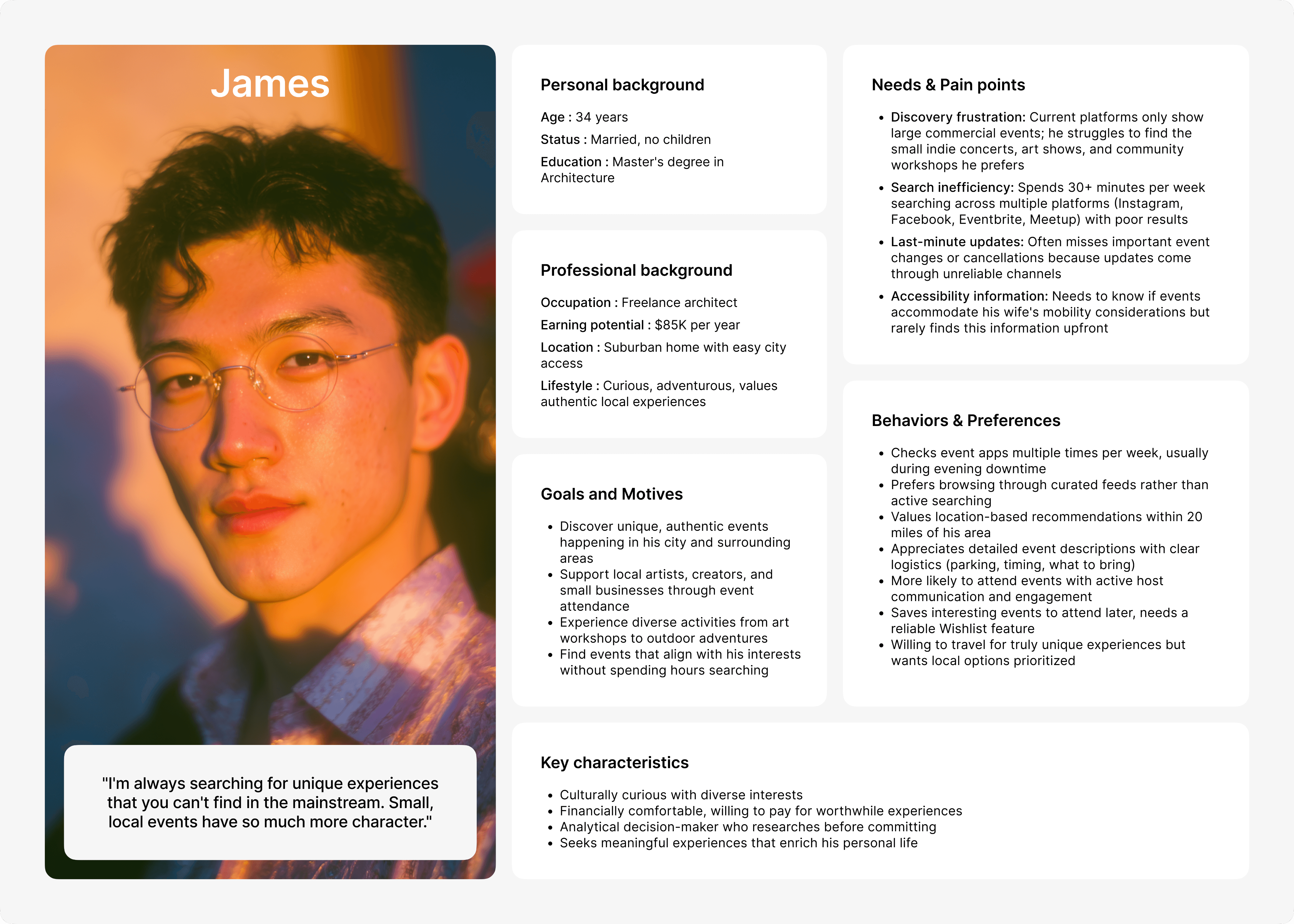
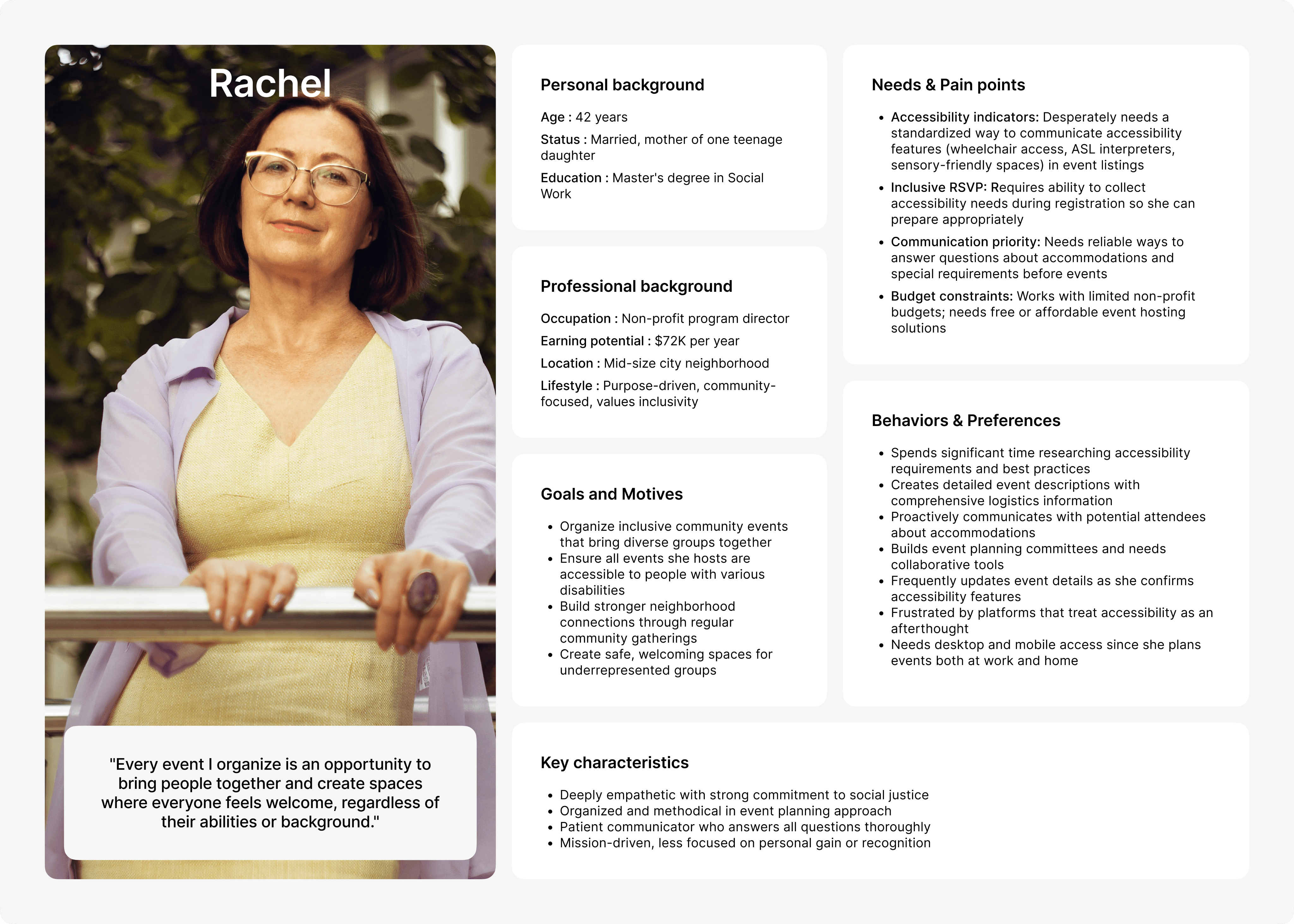
To represent EventSphere's diverse user base, I developed three primary personas based on the research findings. These personas represent both event hosts and attendees, capturing the dual nature of the platform's audience.
RESEARCH COMPETITORS
Competitors
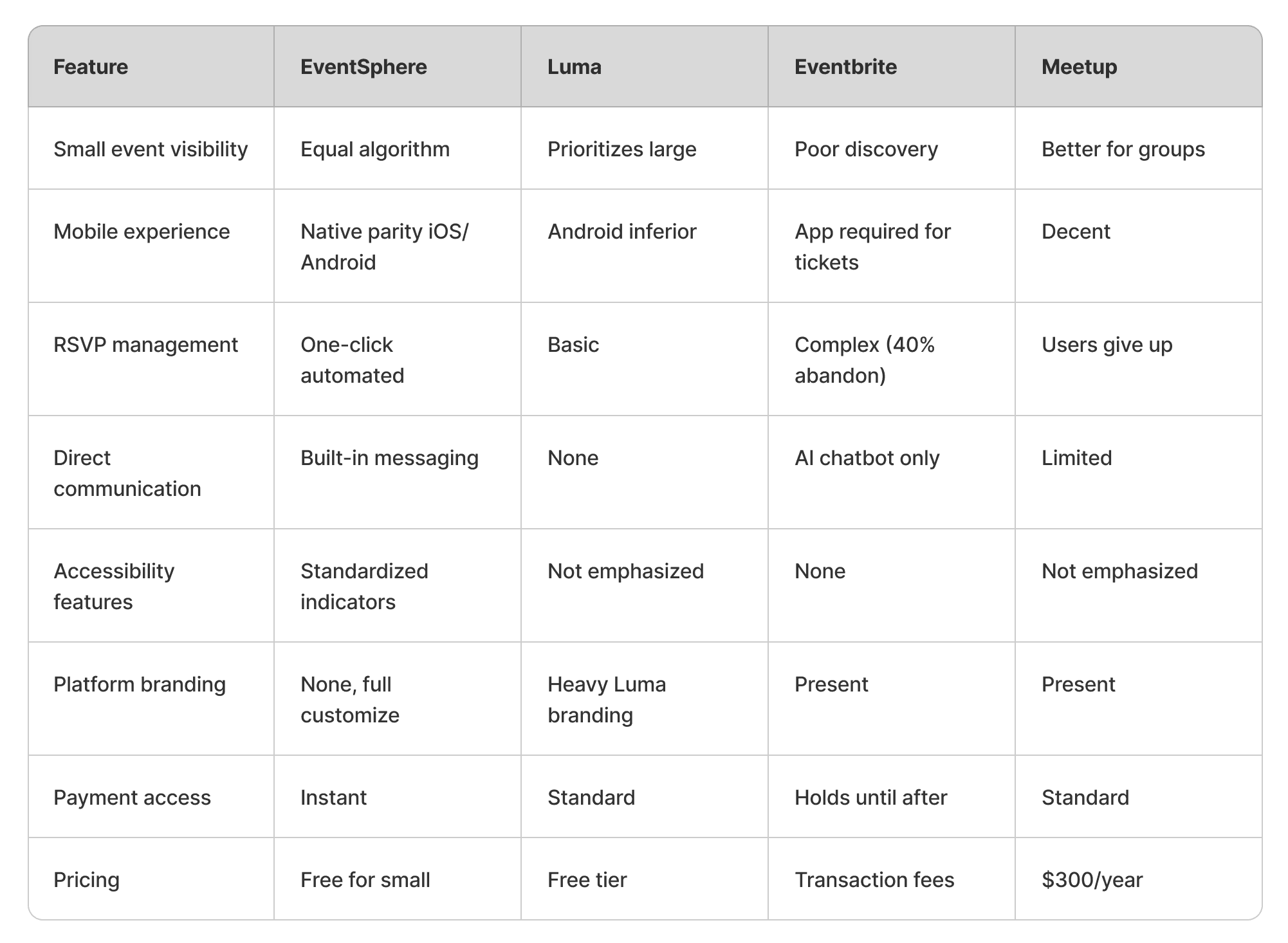
Based on my research, EventSphere has three primary competitors in the event discovery and hosting space: Luma, Eventbrite, and Meetup. The following table provides an overview of how EventSphere compares with competitors on various important parameters.
SWOT Analysis
Based on my competitive analysis and research findings, I developed the following SWOT analysis for EventSphere.
Strengths
Equal visibility algorithm, accessibility-first design, native mobile parity, one-click RSVP, built-in messaging, no forced branding, instant payments, data ownership
Weaknesses
New platform, no user base, requires critical mass, solo development, monetization needs validation
Opportunities
23% micro-event growth, 54% prefer local events, 90% rely on feeds, 42% need accessibility info, Android user frustration with competitors
Threats
Established competitors, network effects, feature replication risk, user acquisition costs, platform dependencies
USER STORIES & SOLUTION SKETCHES
User story
Focusing on the Experience Seeker James persona, I developed the following user stories that provide insights into his needs and requirements as an event attendee seeking authentic local experiences.
User journey
James's goal: To discover and attend a unique local event that matches my interests without spending excessive time searching.
James's journey: This user journey provides insight into James's experience as an event attendee who values authentic local experiences over commercial events. It highlights his interaction with the discovery feed, filtering features, and direct communication with hosts.
User flow
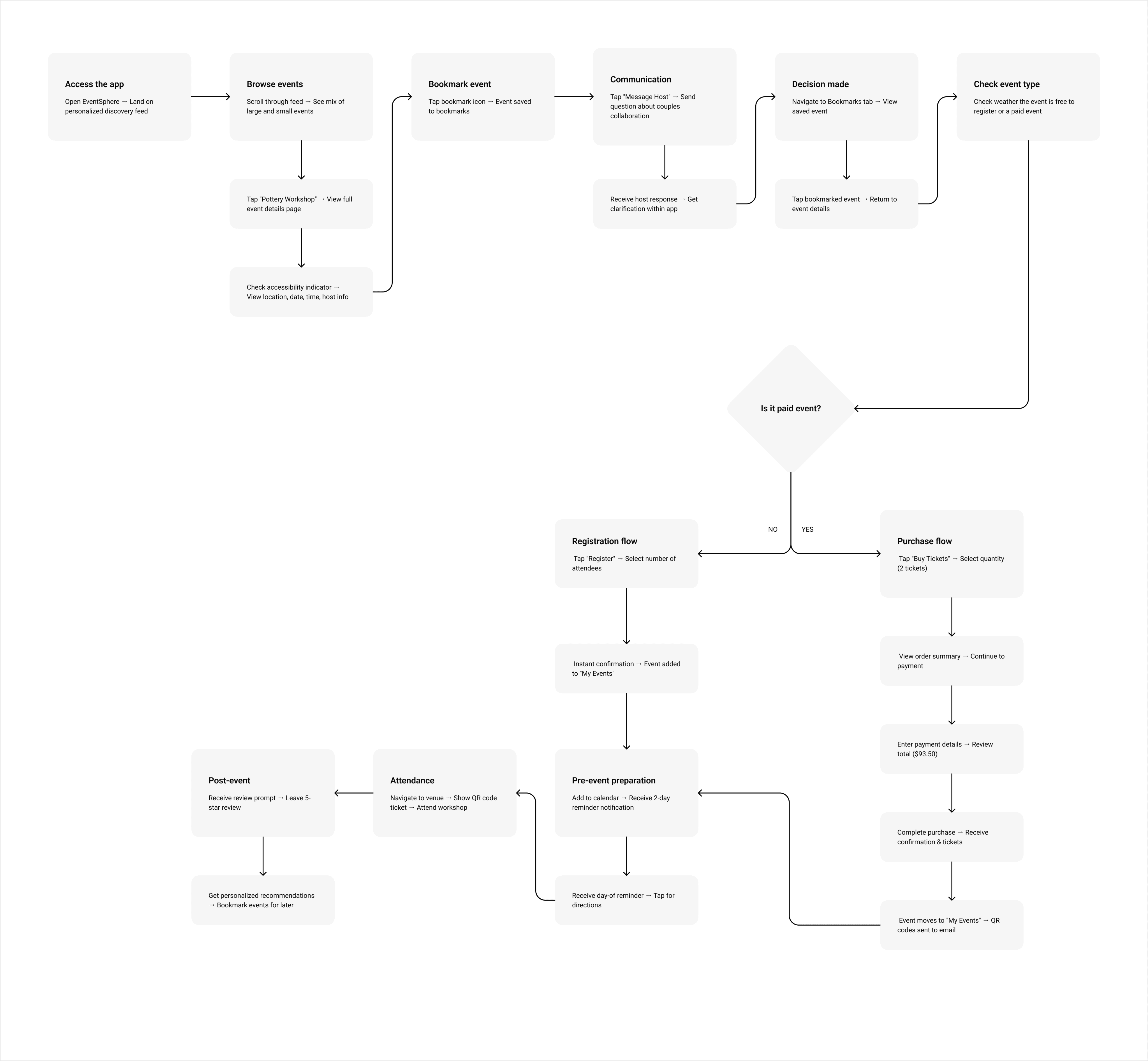
This user flow provides a step-by-step overview of James's interactions and actions as he engages with the EventSphere app, from initial exploration to successful event attendance and post-event engagement.
IA & WIREFRAMES
Information Architecture
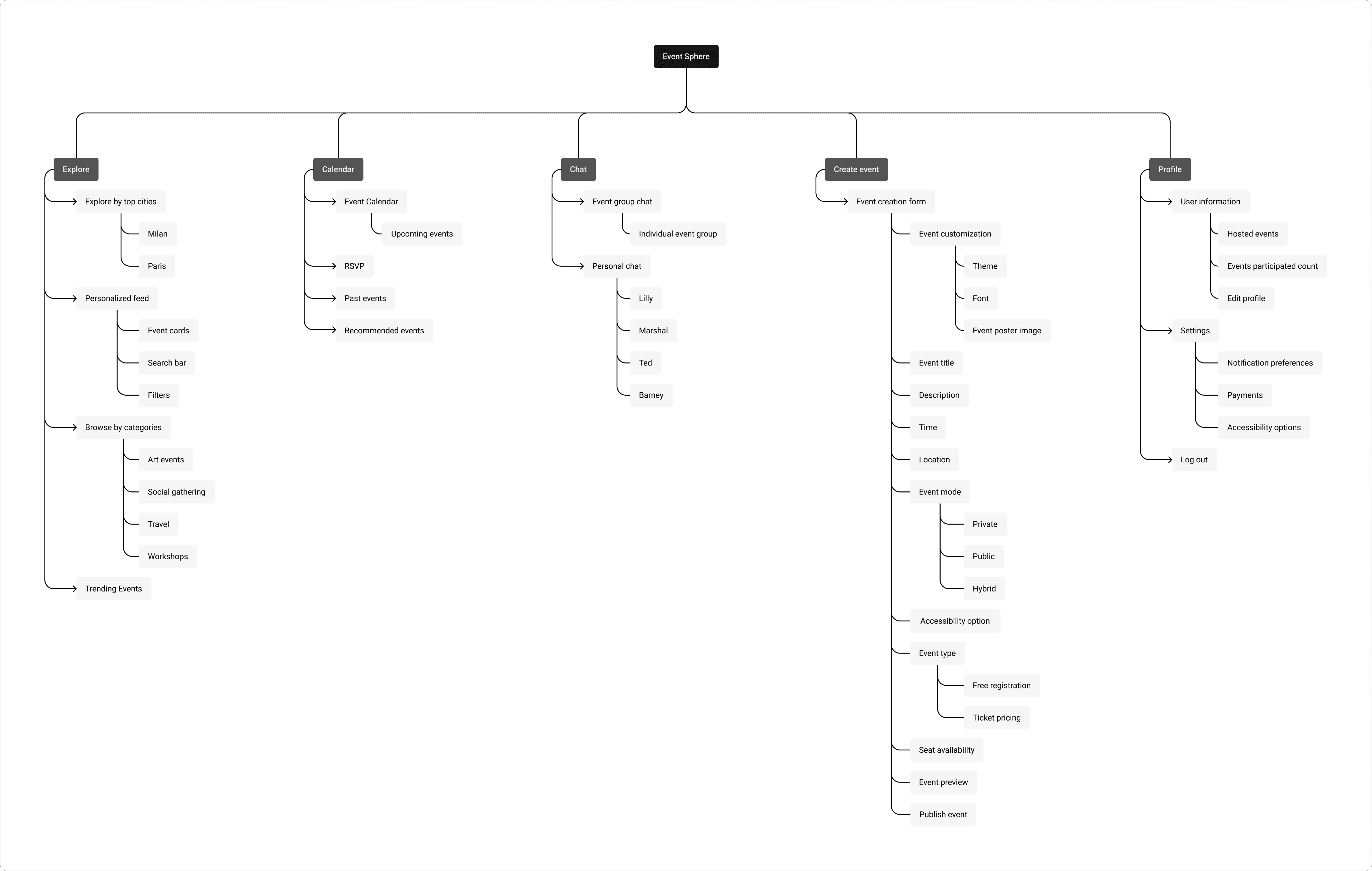
Based on insights from card sorting exercises and user research findings, I created the following diagram as a representation of the final information architecture for the EventSphere mobile application.
Site map
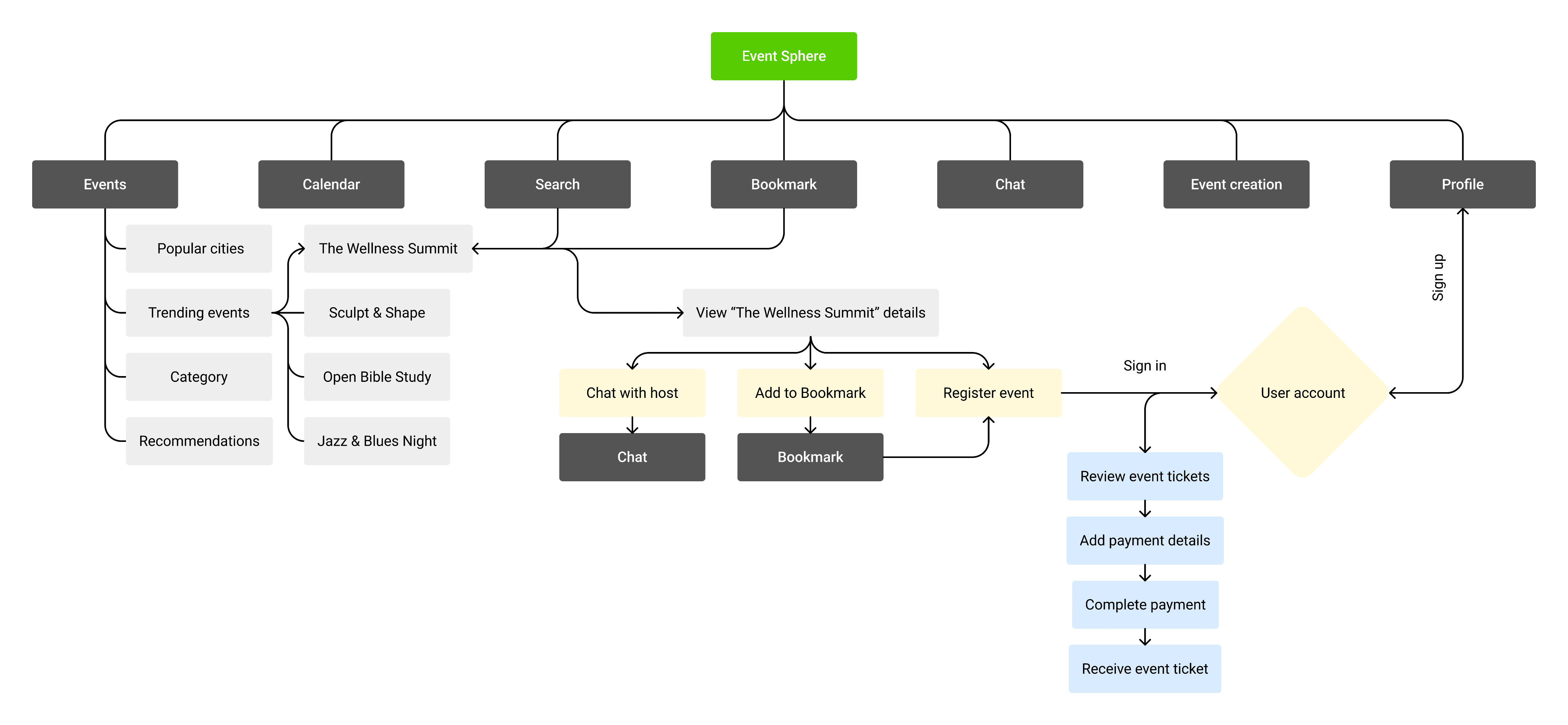
Using the finalized IA, the following sitemap shows James’s journey from event selection to registering an event.
Wireframes
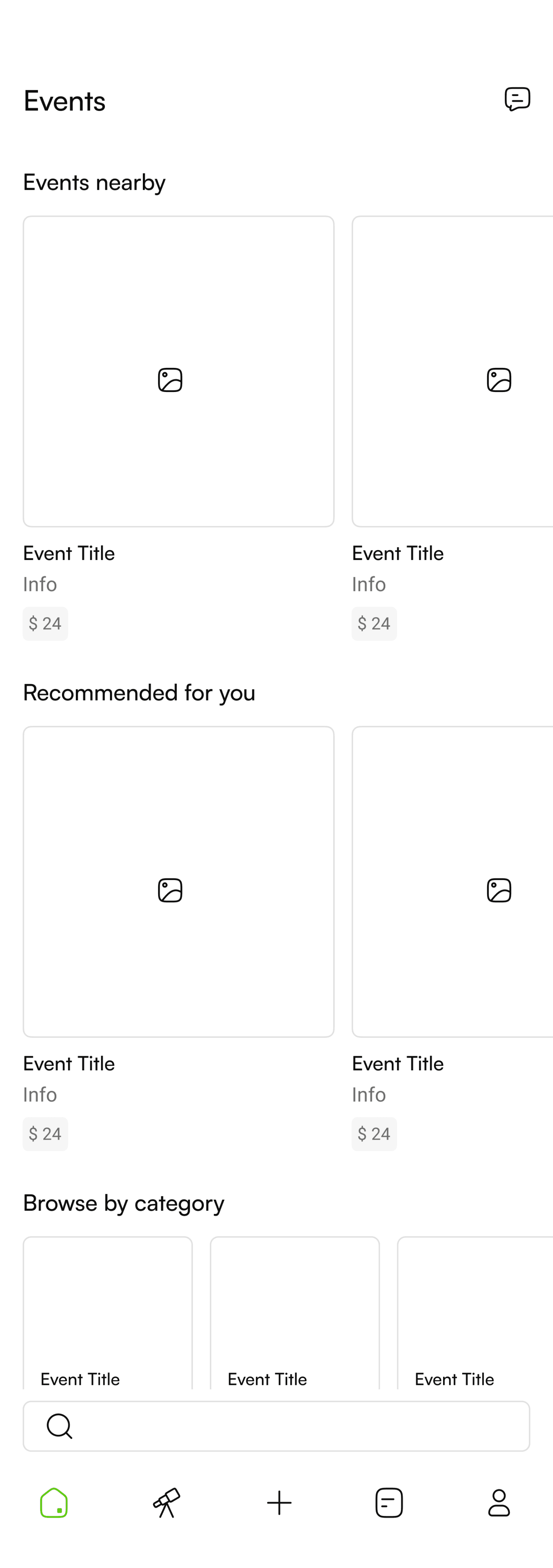
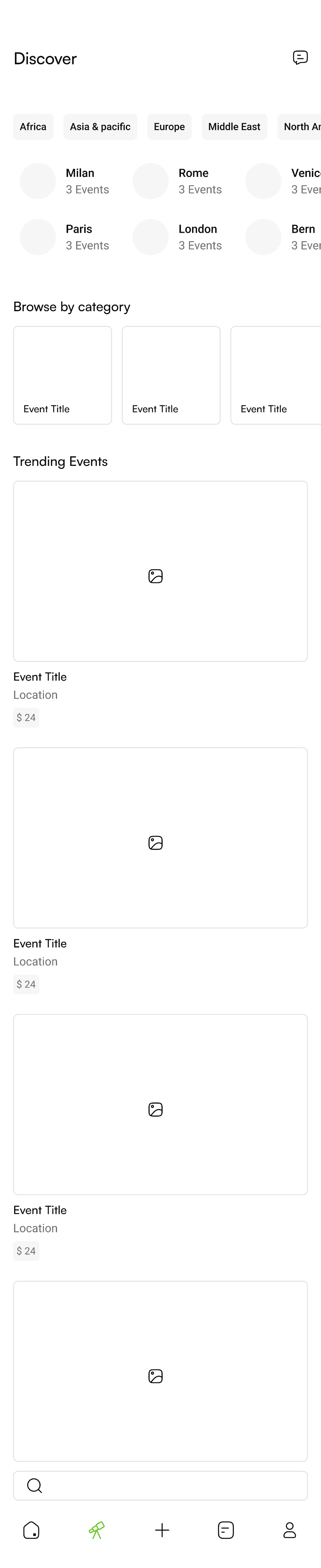
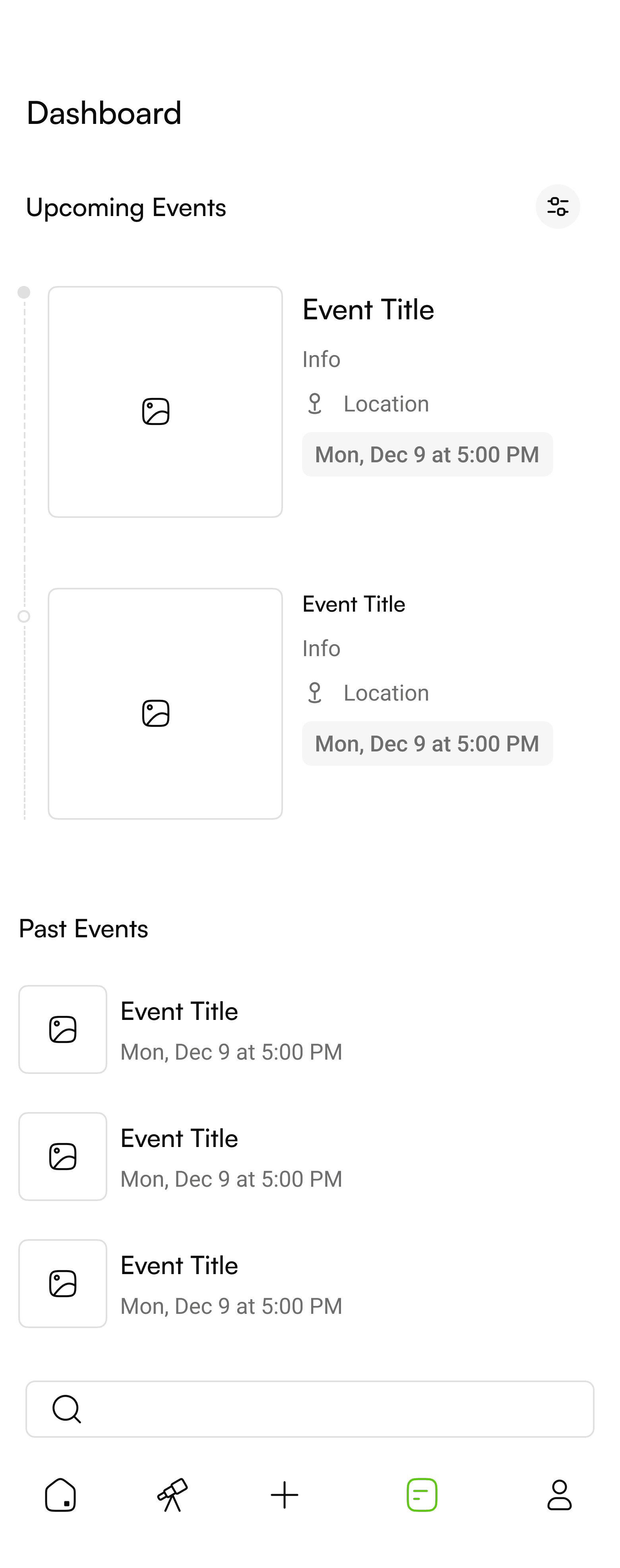
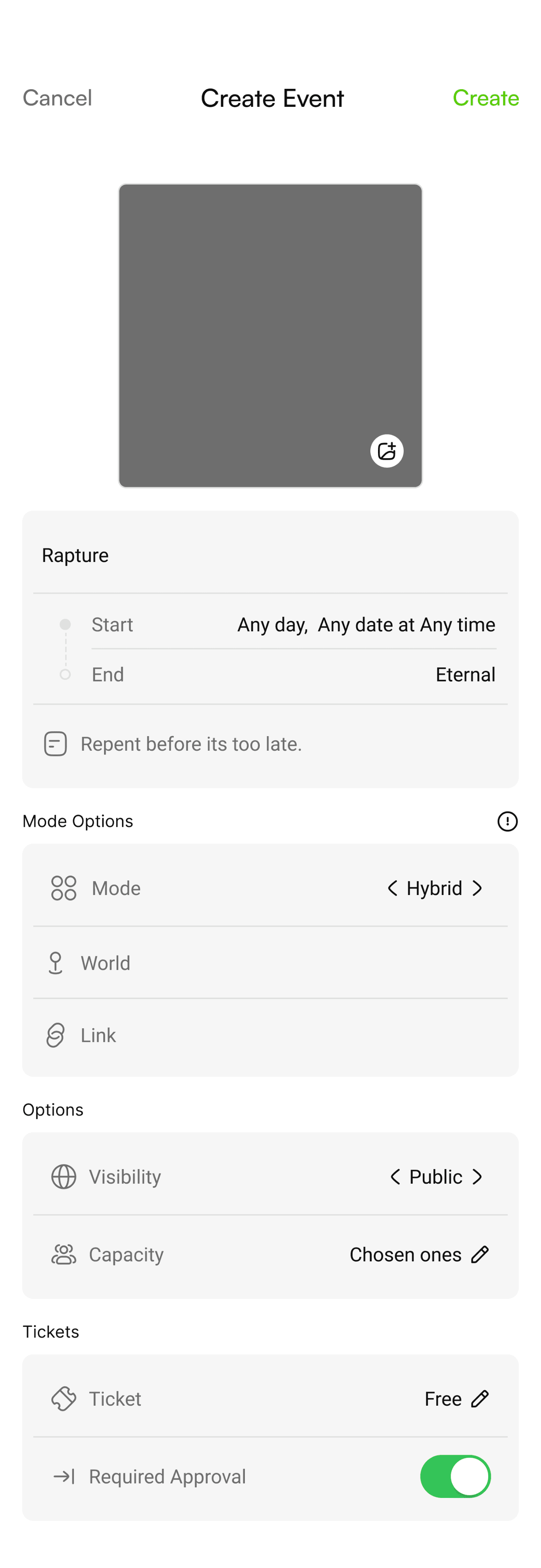
I included some Low-fidelity wireframes for the base navigations such as explore page, calendar, event creation page and user profile.
PROTOTYPES
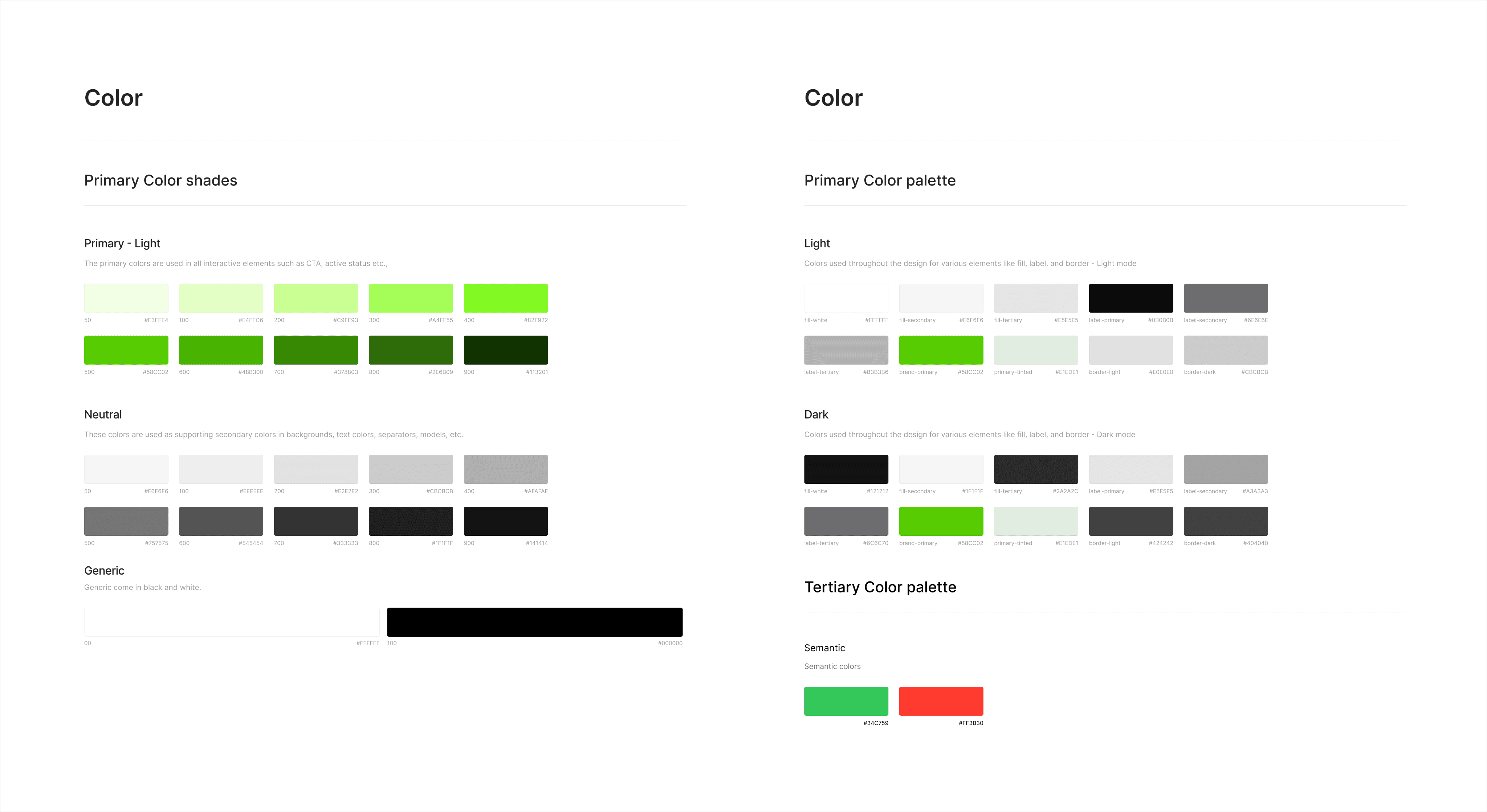
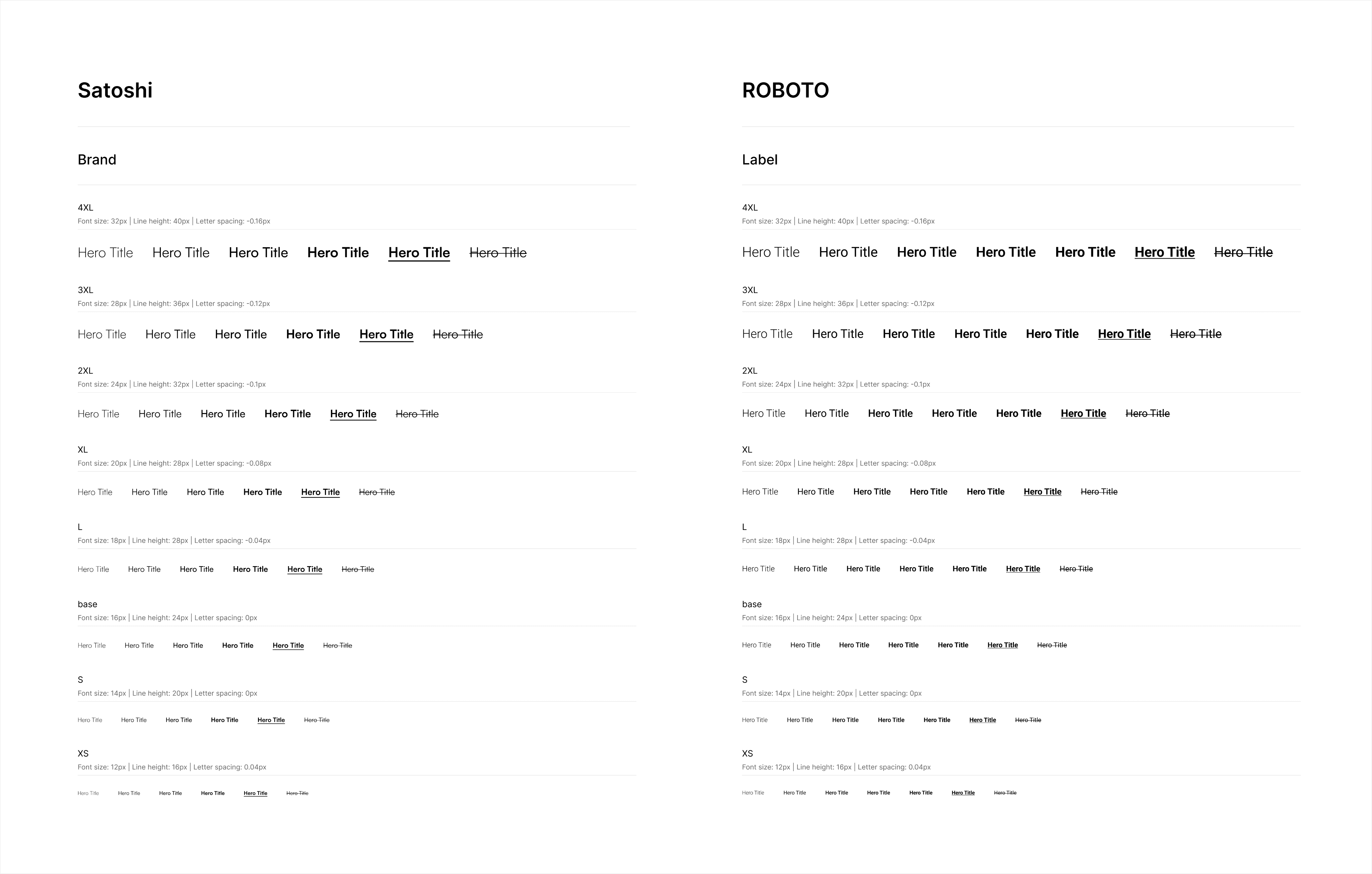
Design system
I created the following high-fidelity UI designs for the EventSphere mobile app, incorporating accessibility guidelines and modern mobile design patterns while maintaining a clean, user-friendly aesthetic optimized for both iOS and Android platforms.
Onboarding
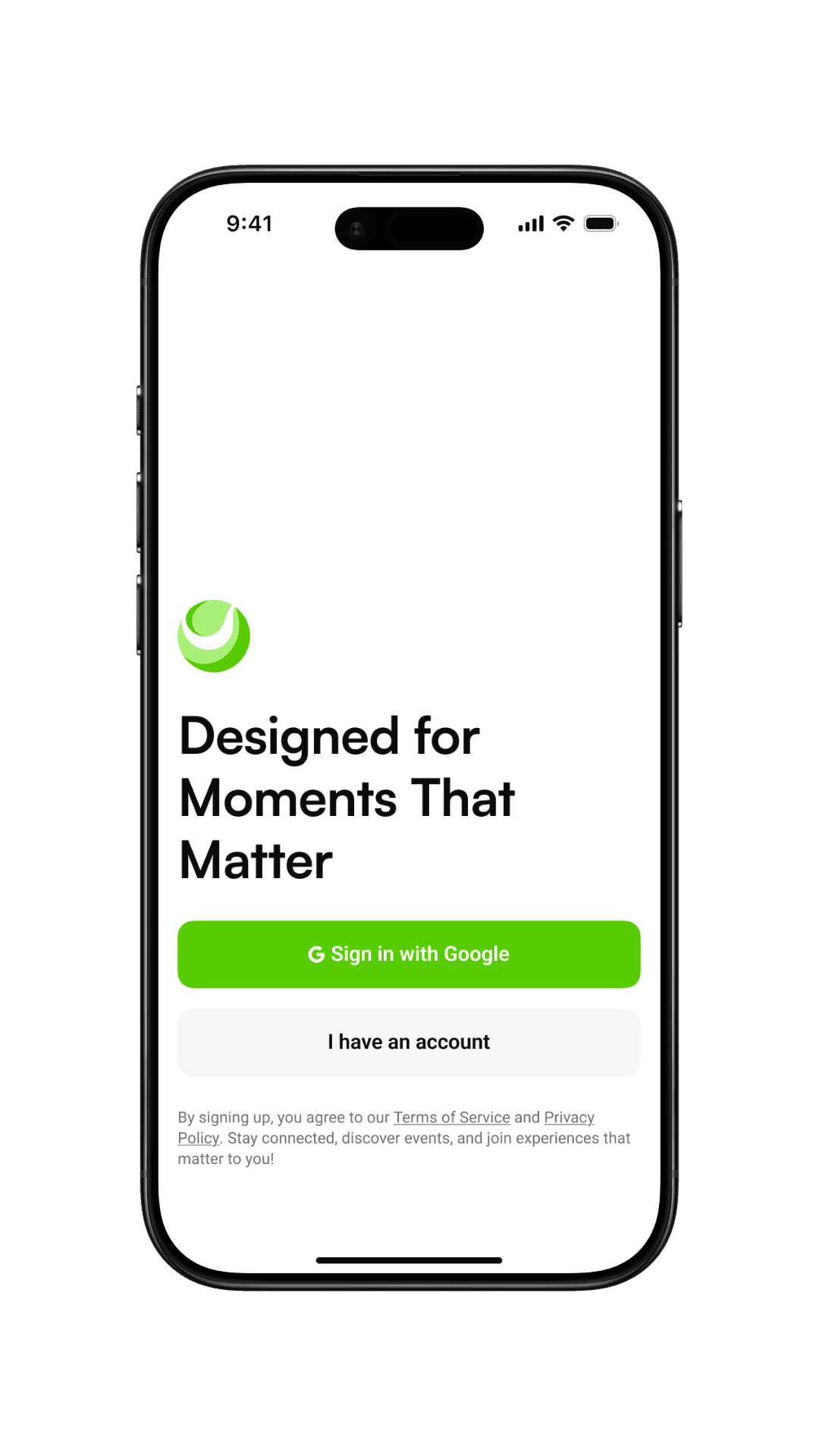
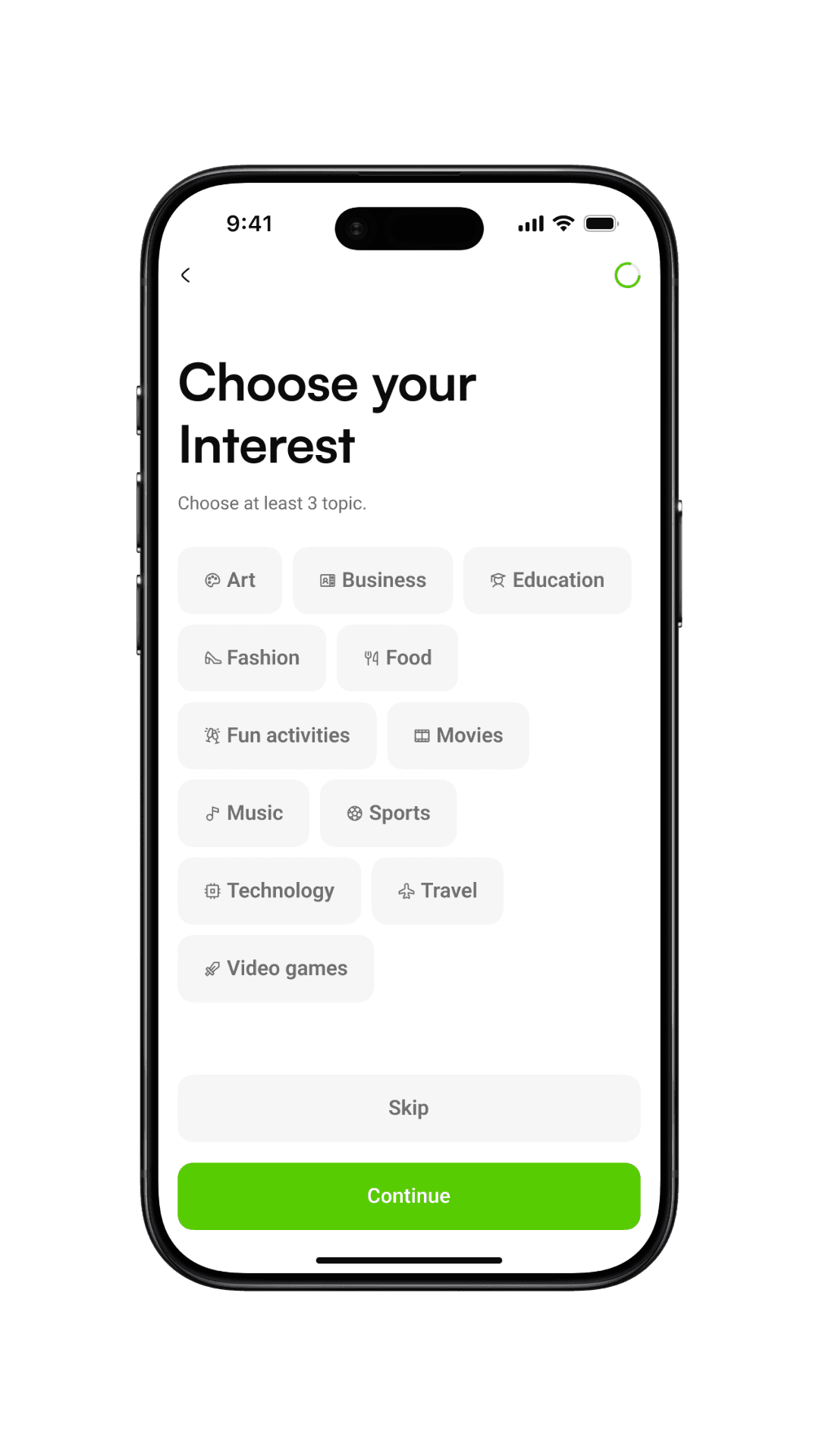
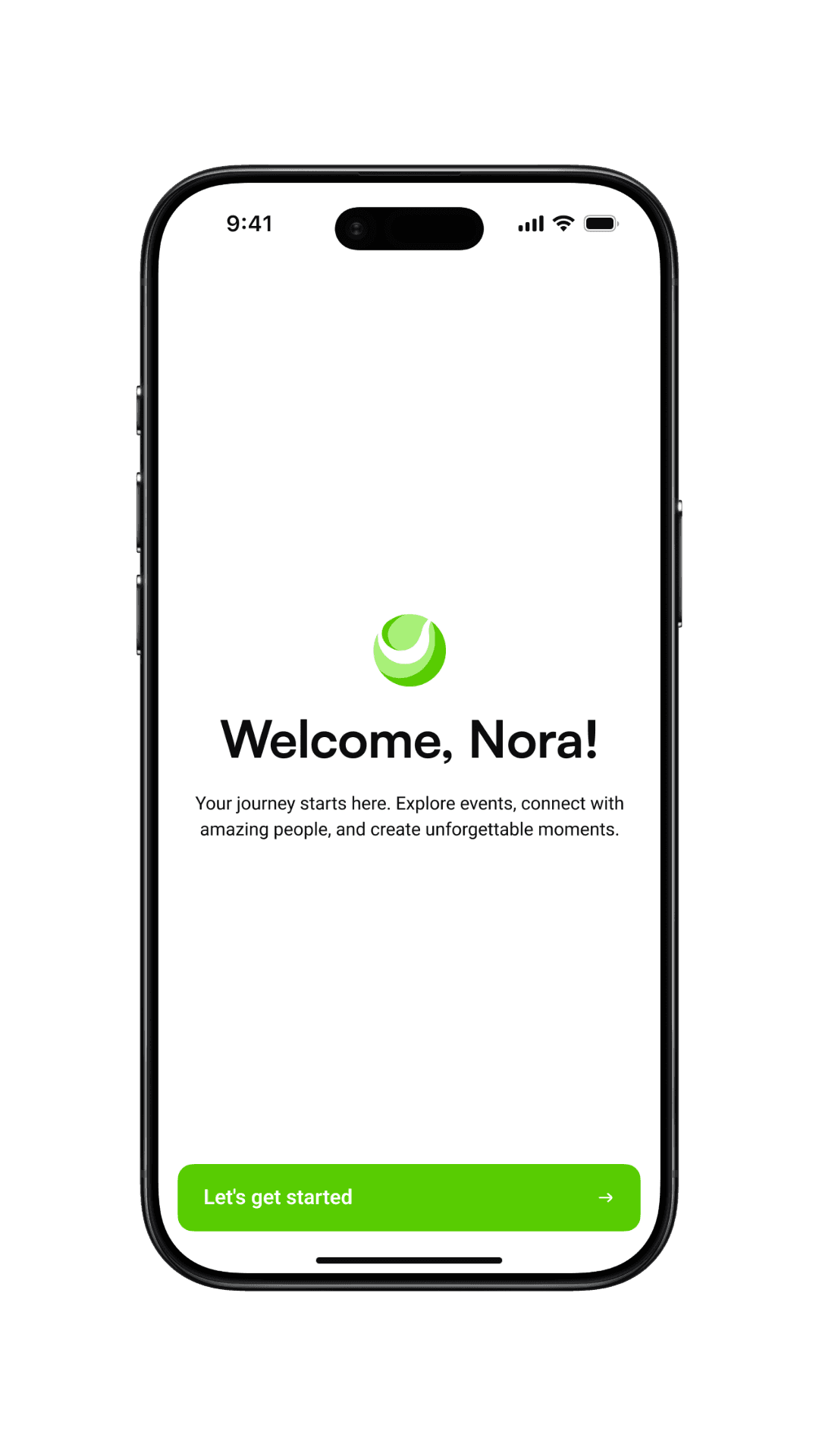
Three welcoming screens introduce new users to EventSphere's core value: discovering local events of all sizes, transparent booking, and accessible venues. Users can skip or complete the introduction.
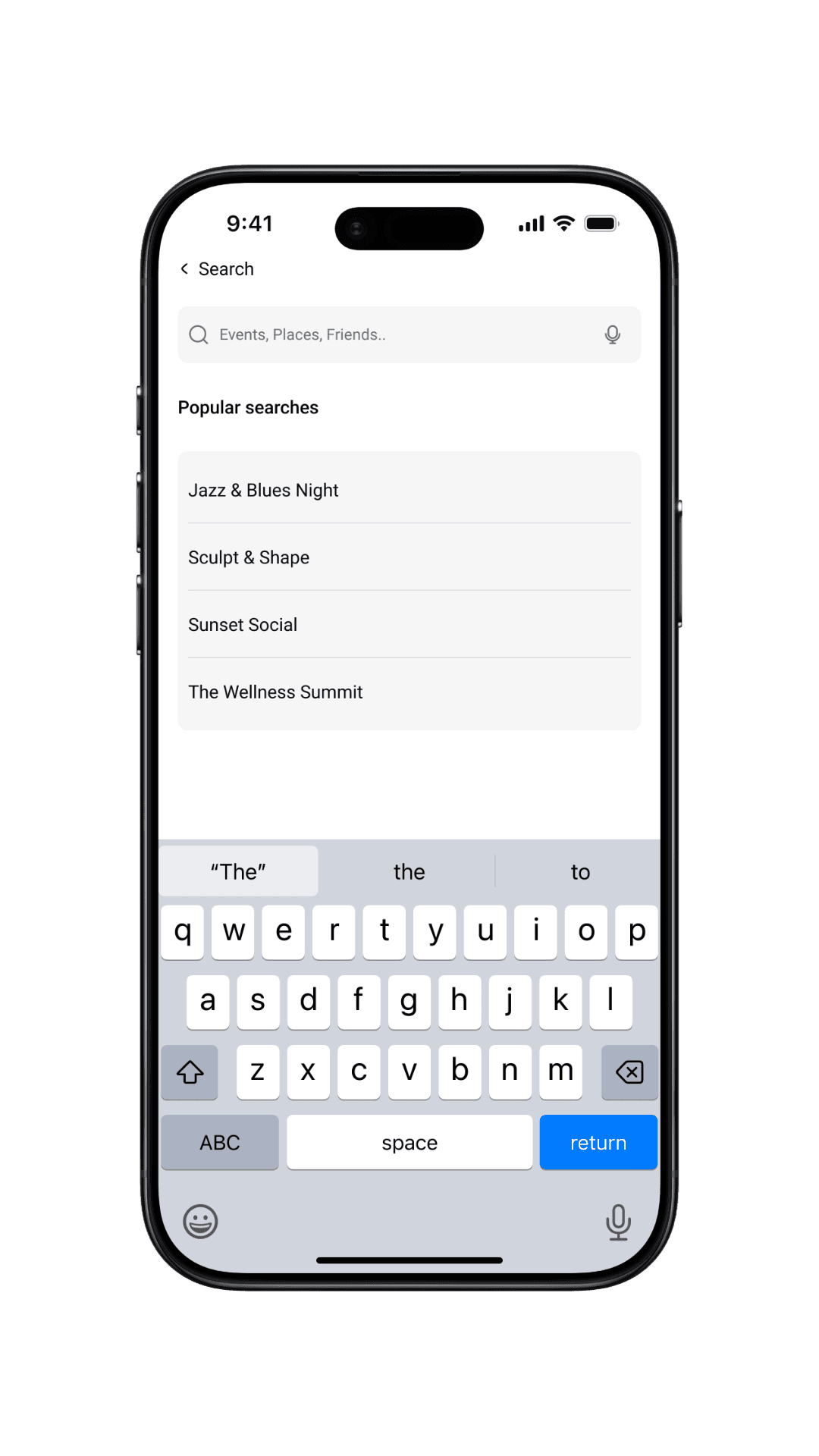
Explore
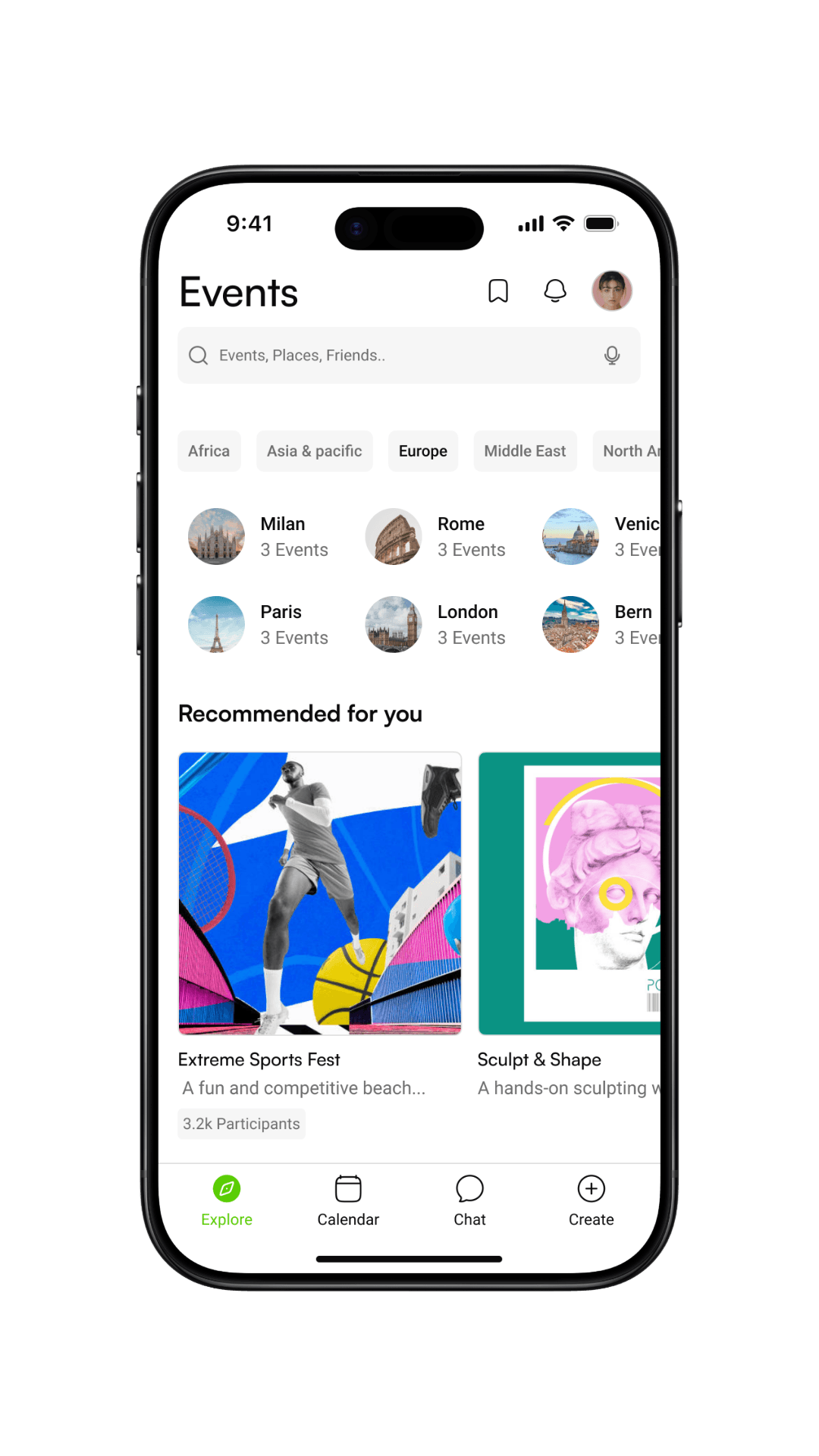
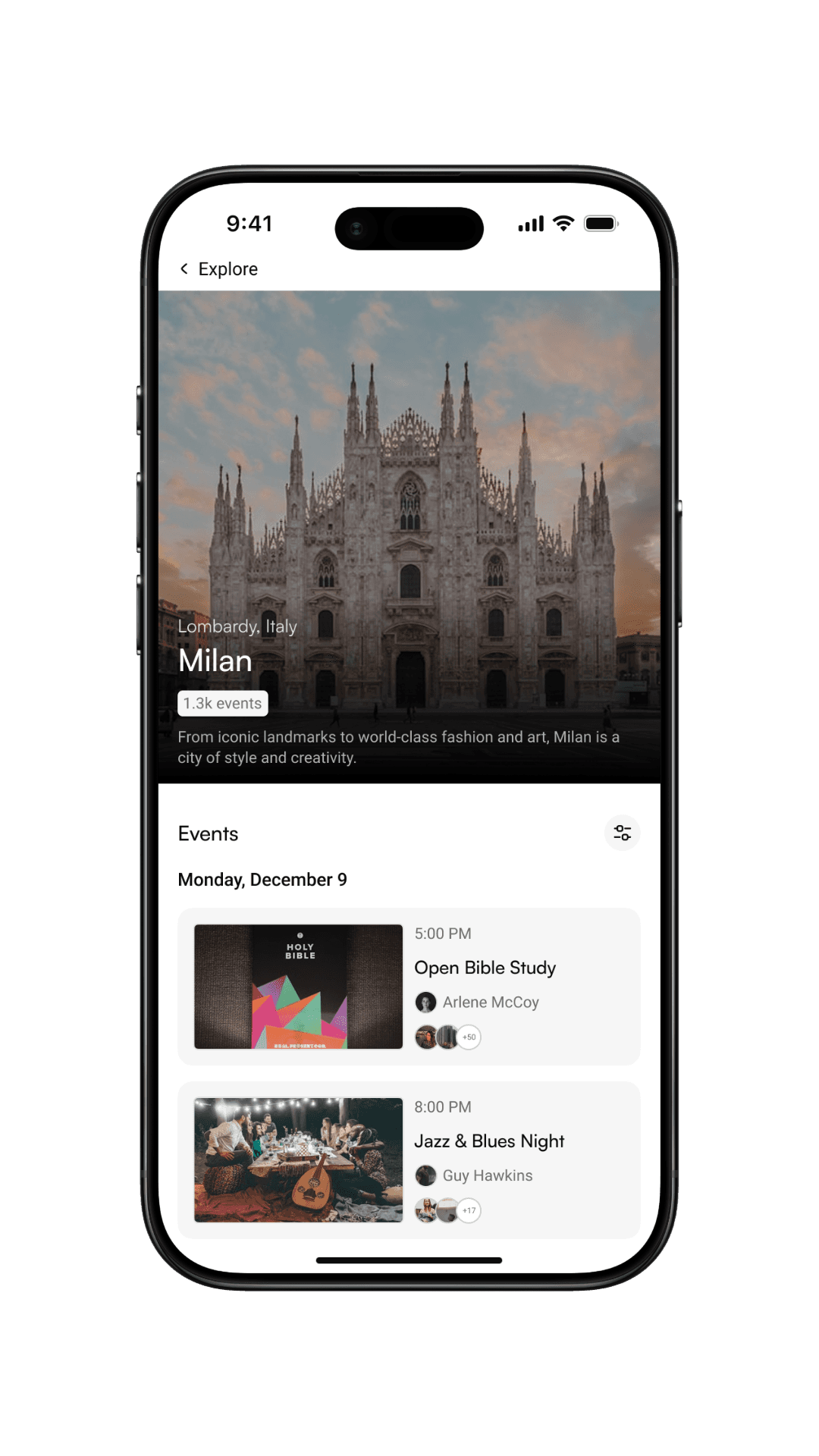
The main discovery hub organized by top cities, personalized recommendations, categories, and trending events. Cards display event image, title, date, host, and participant previews for quick scanning.
Calendar
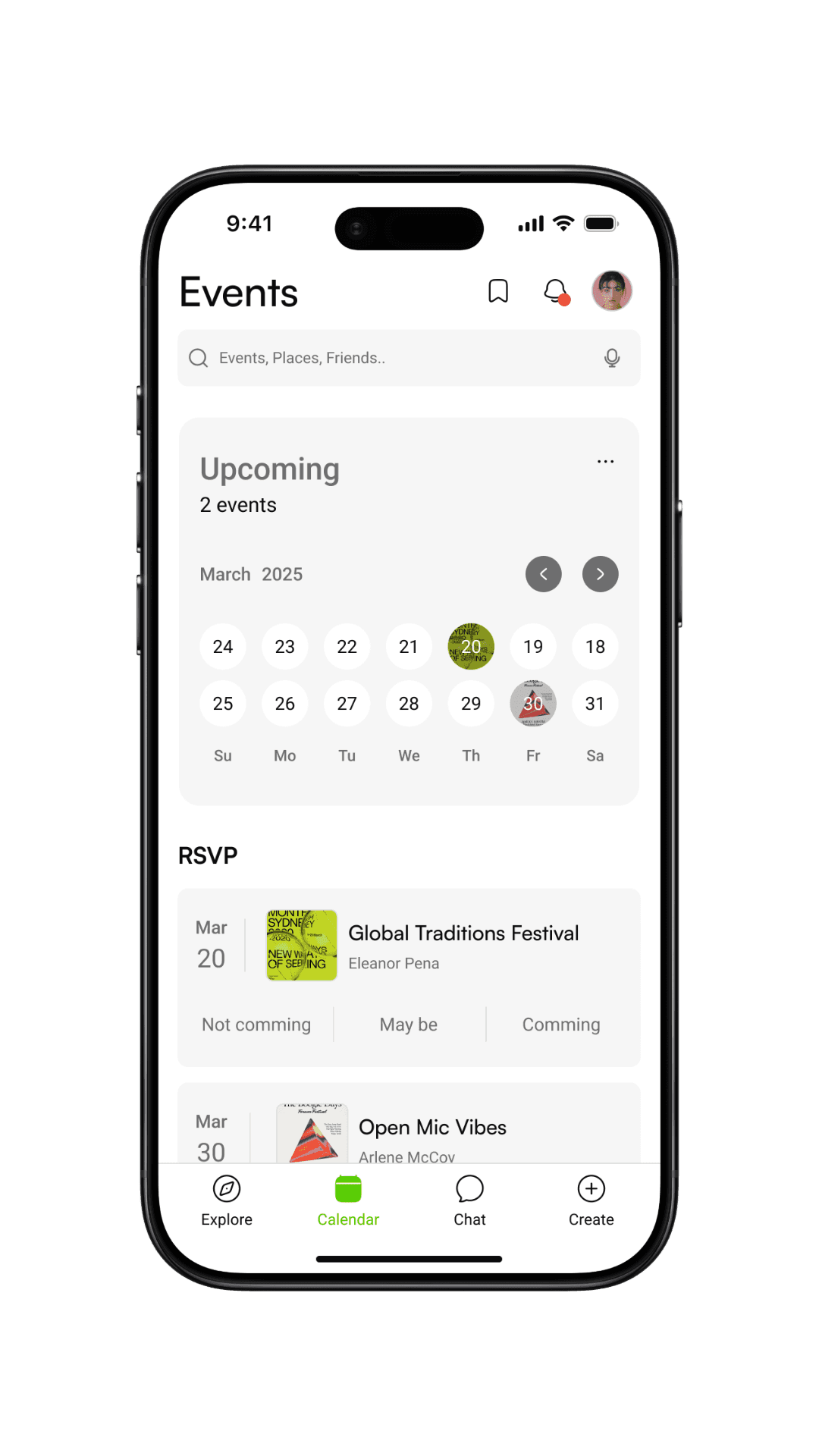
Visual calendar with event images as date backgrounds for easy identification. Includes RSVP section with three quick response options (Not Coming, Maybe, Coming) for upcoming events, plus past events list below.
Event details
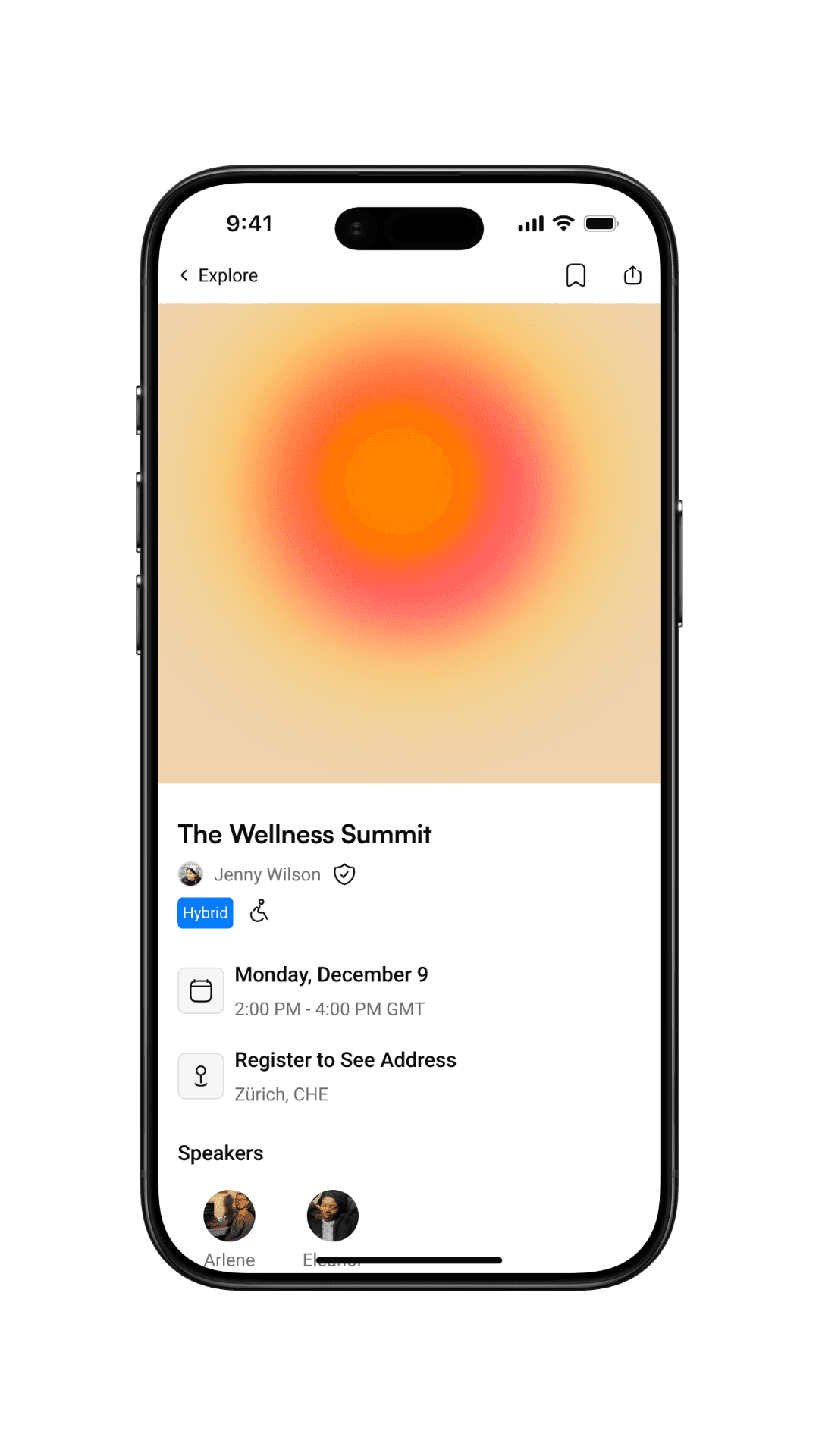
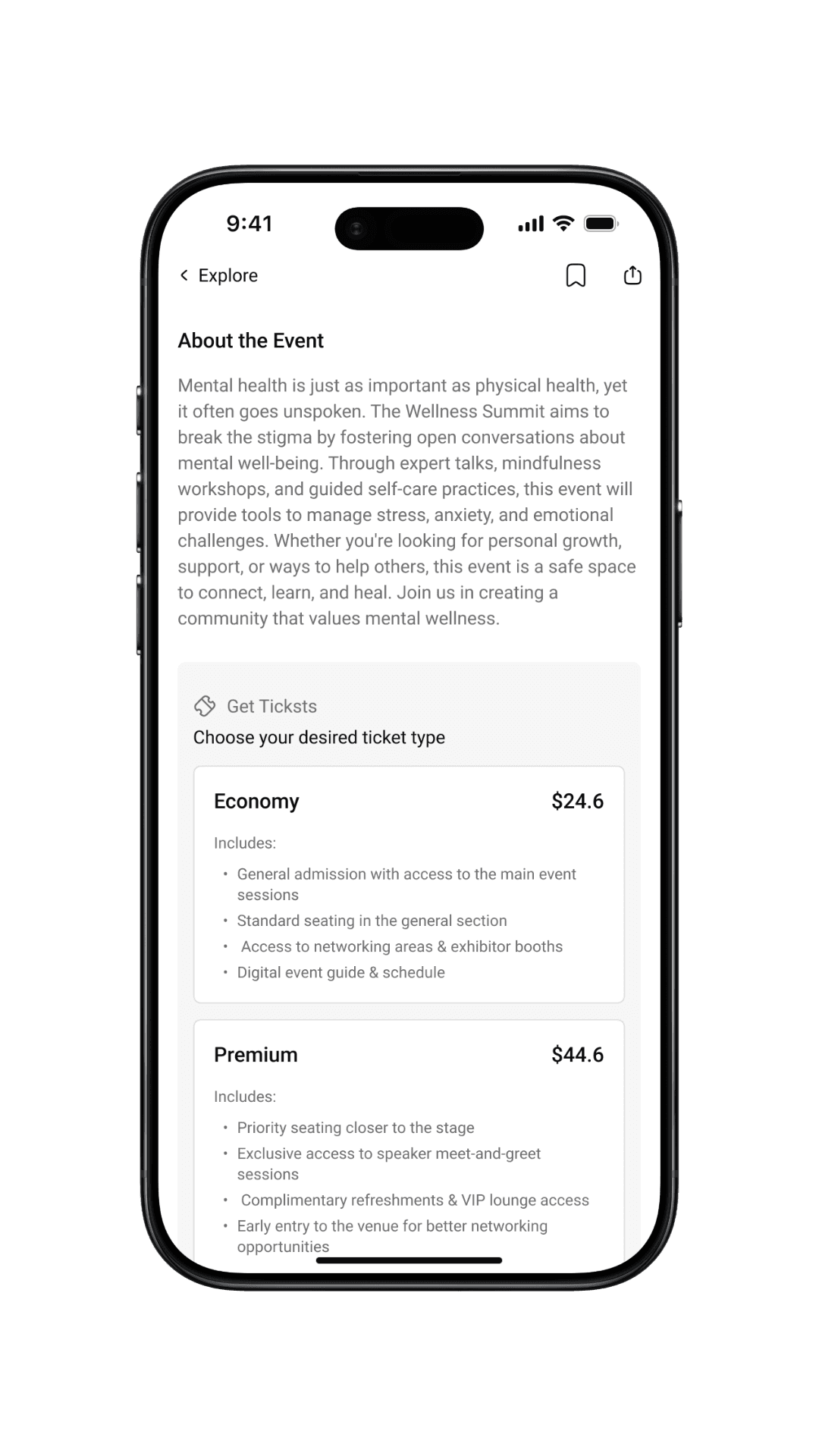
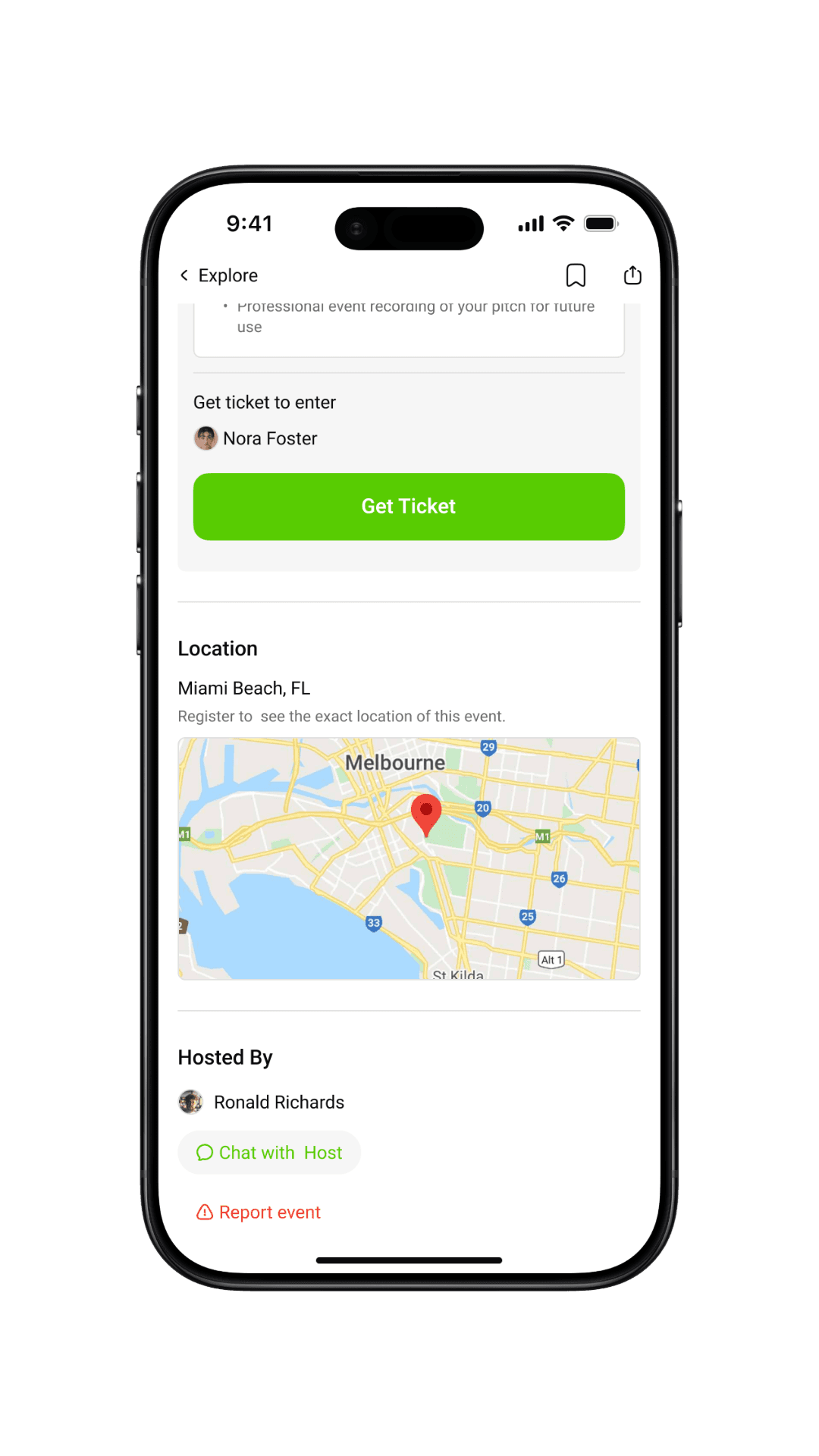
Comprehensive event information with fixed bookmark button at top. Registration button positioned after full description to encourage informed decisions and allow ticket type selection (economy, premium, VIP).
Event registration
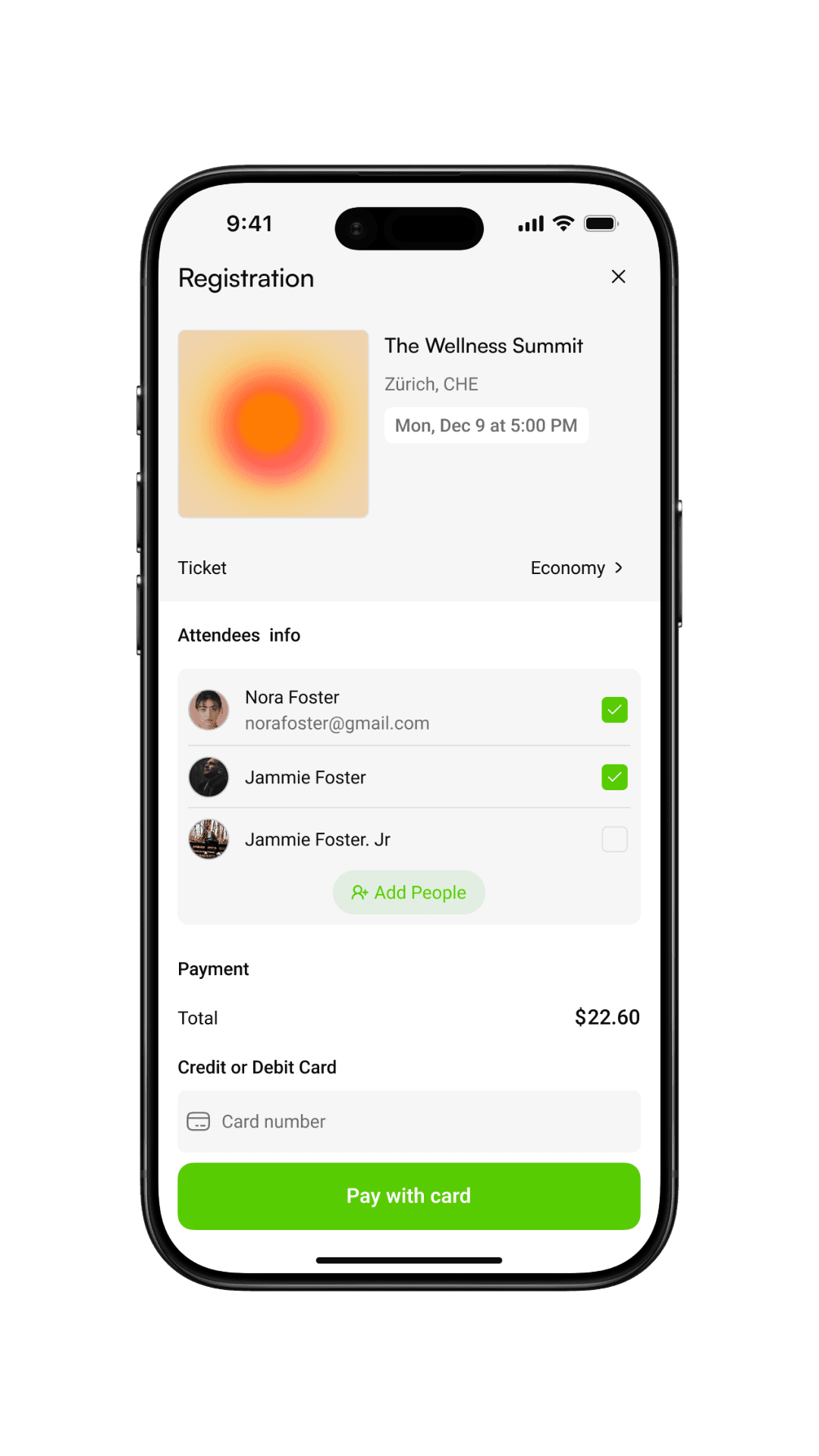
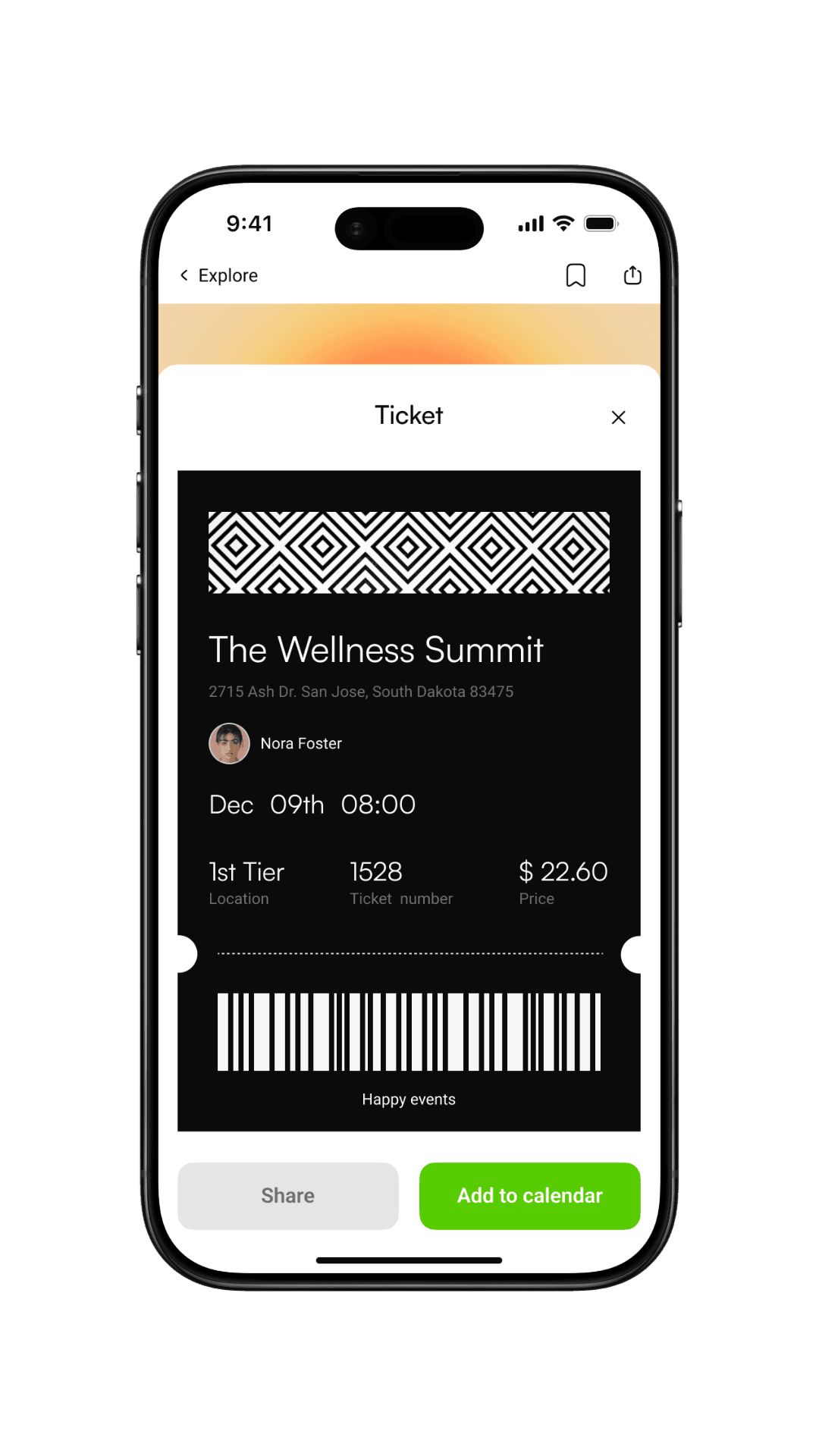
Streamlined registration process for free events with attendee count selection and optional name entry. Instant confirmation moves event to My Events tab.
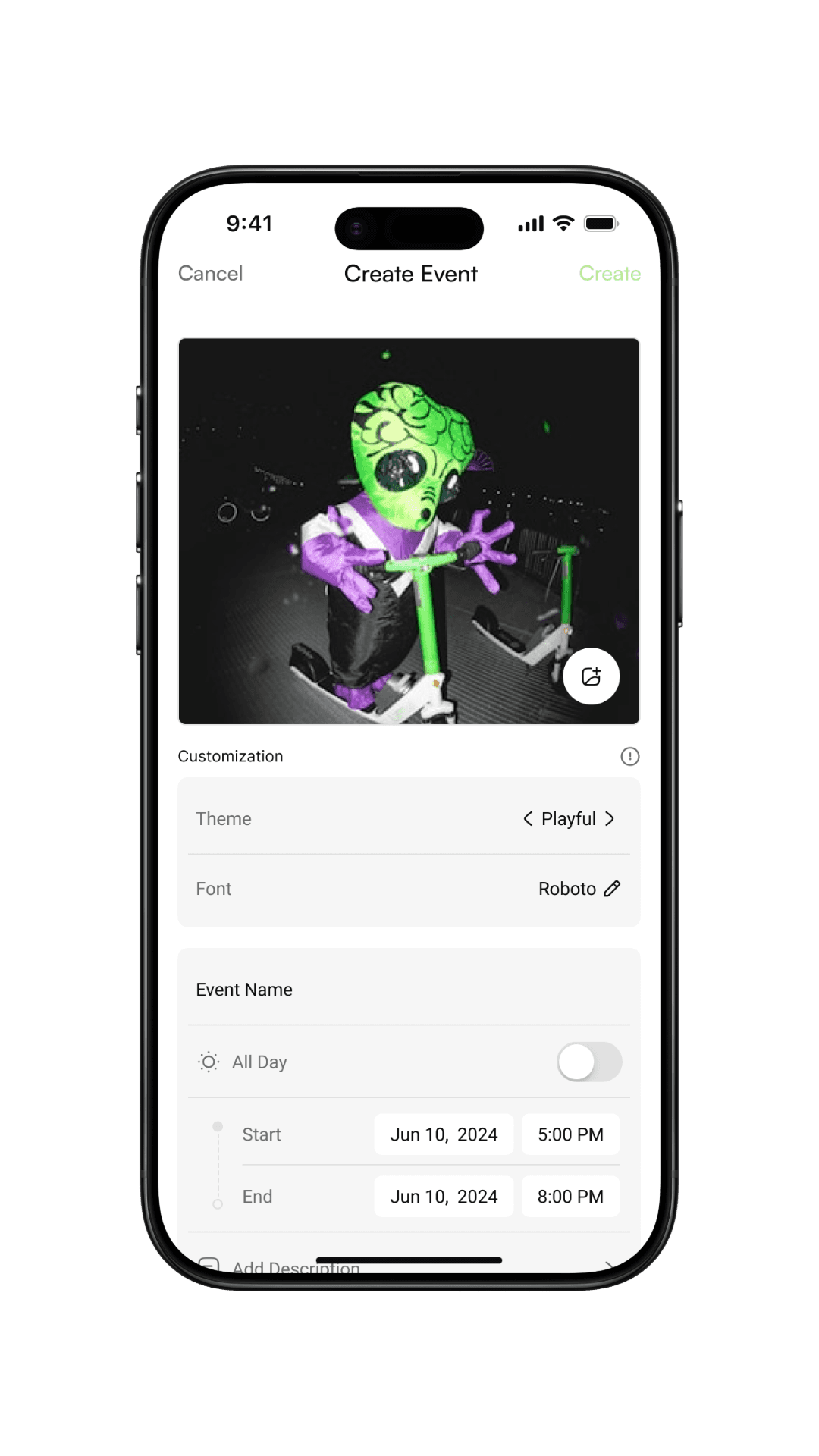
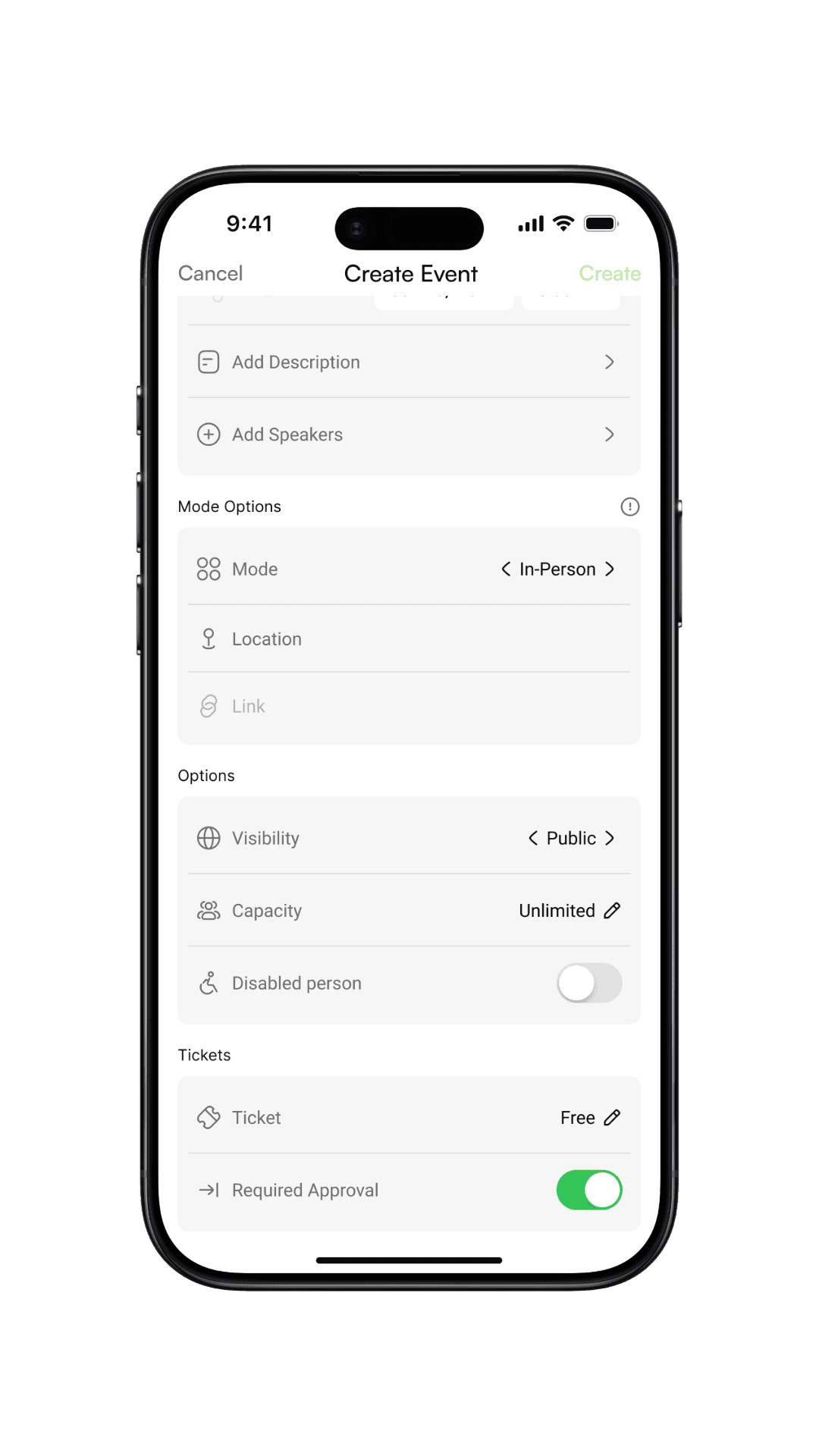
Event creation
Multi-step form enabling hosts to publish events with essential details: basic info, scheduling, location, ticketing options, accessibility features, and photos. Auto-save ensures no data loss.
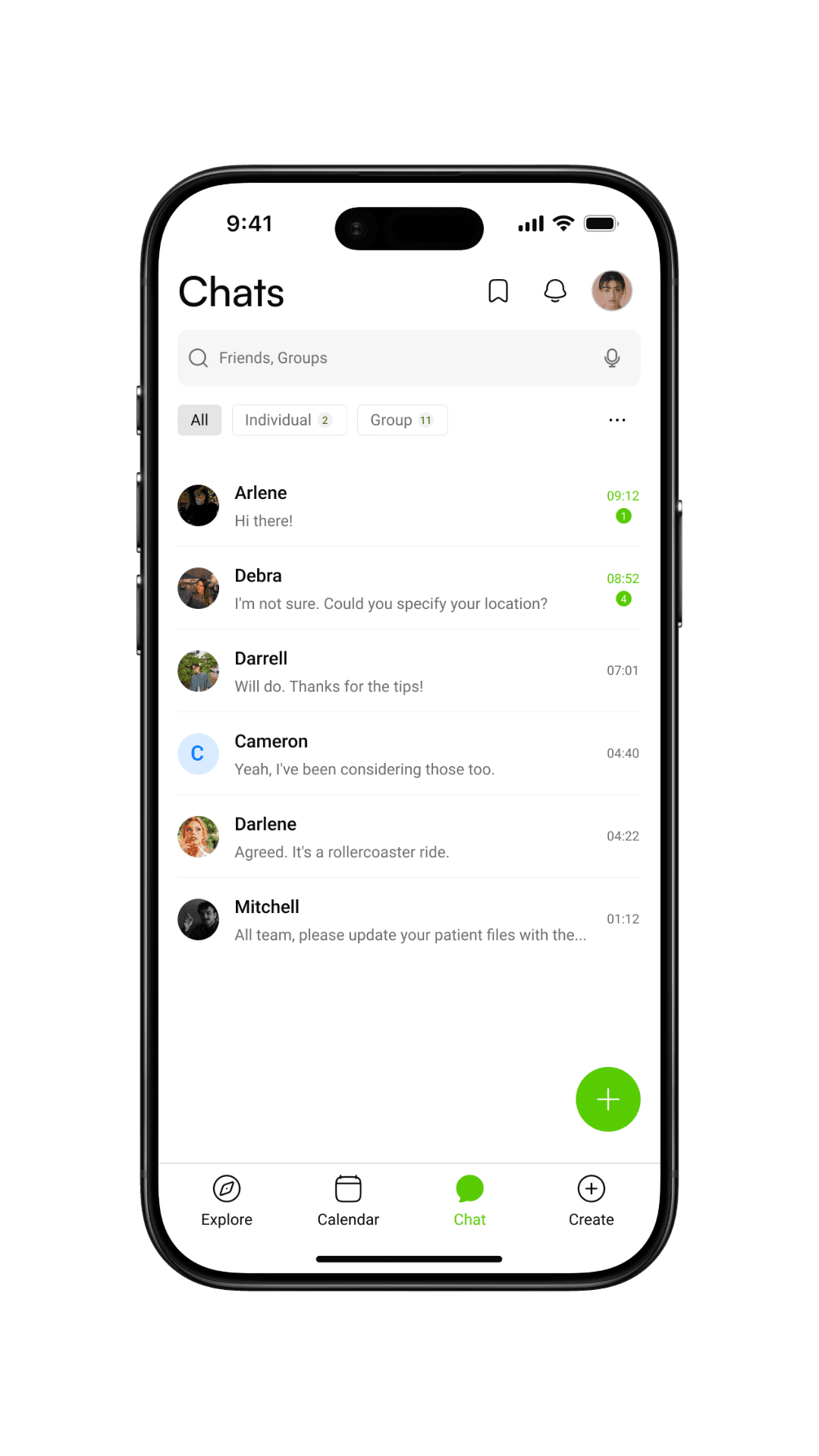
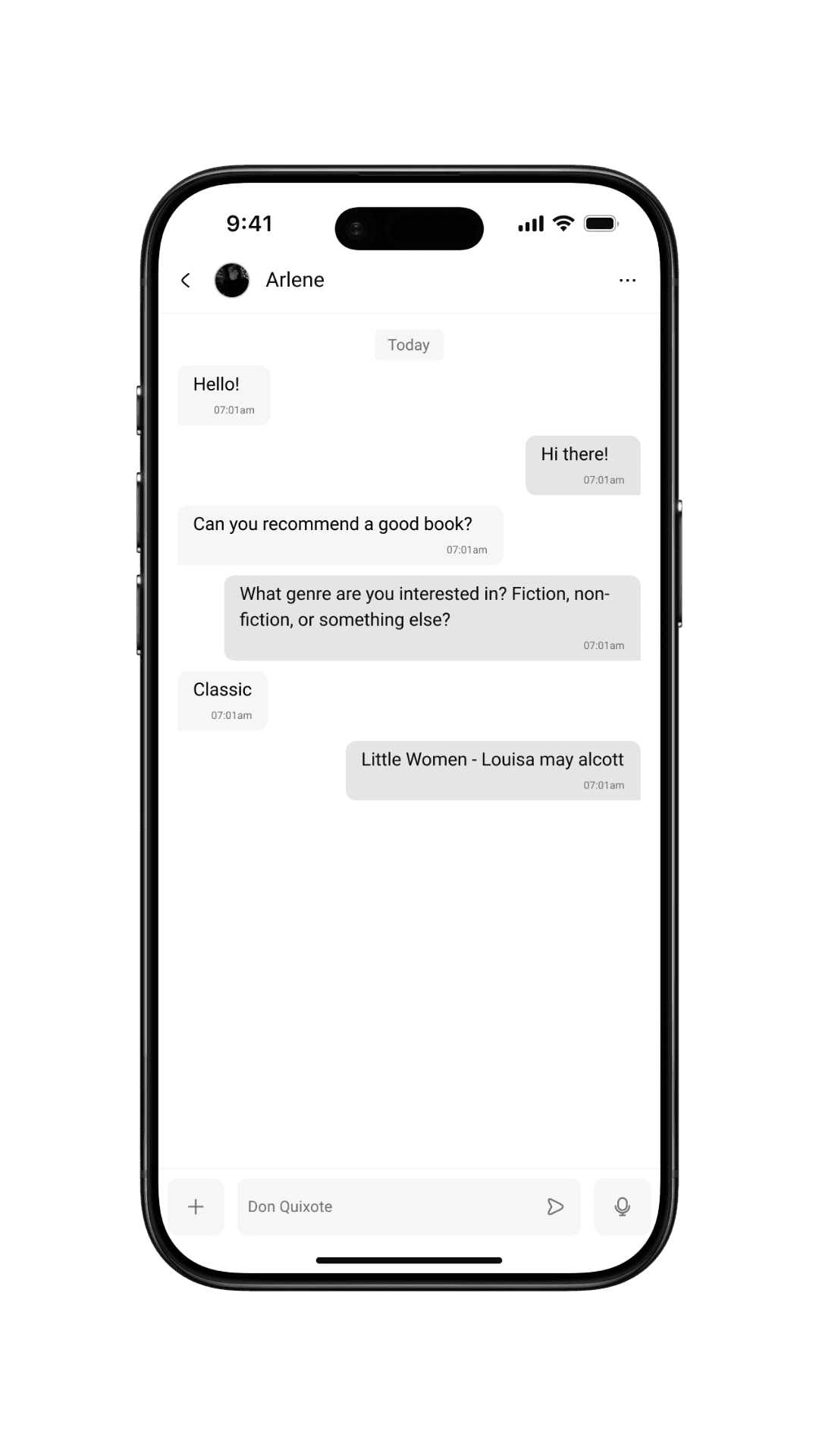
Chat
Streamlined one-on-one communication interface between hosts and attendees. Host identification remains visible at top while conversation flows naturally below, facilitating questions about event logistics, accessibility needs, or special arrangements.
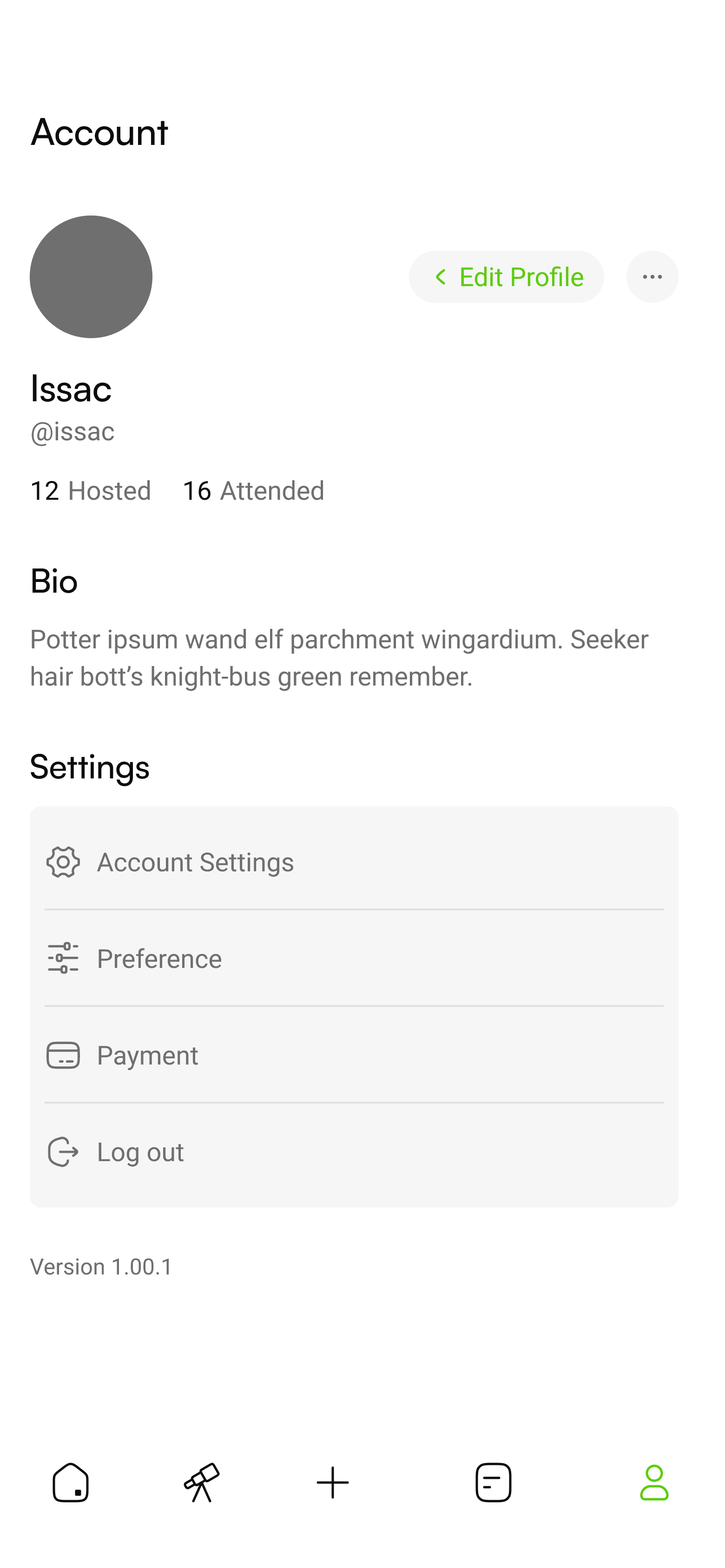
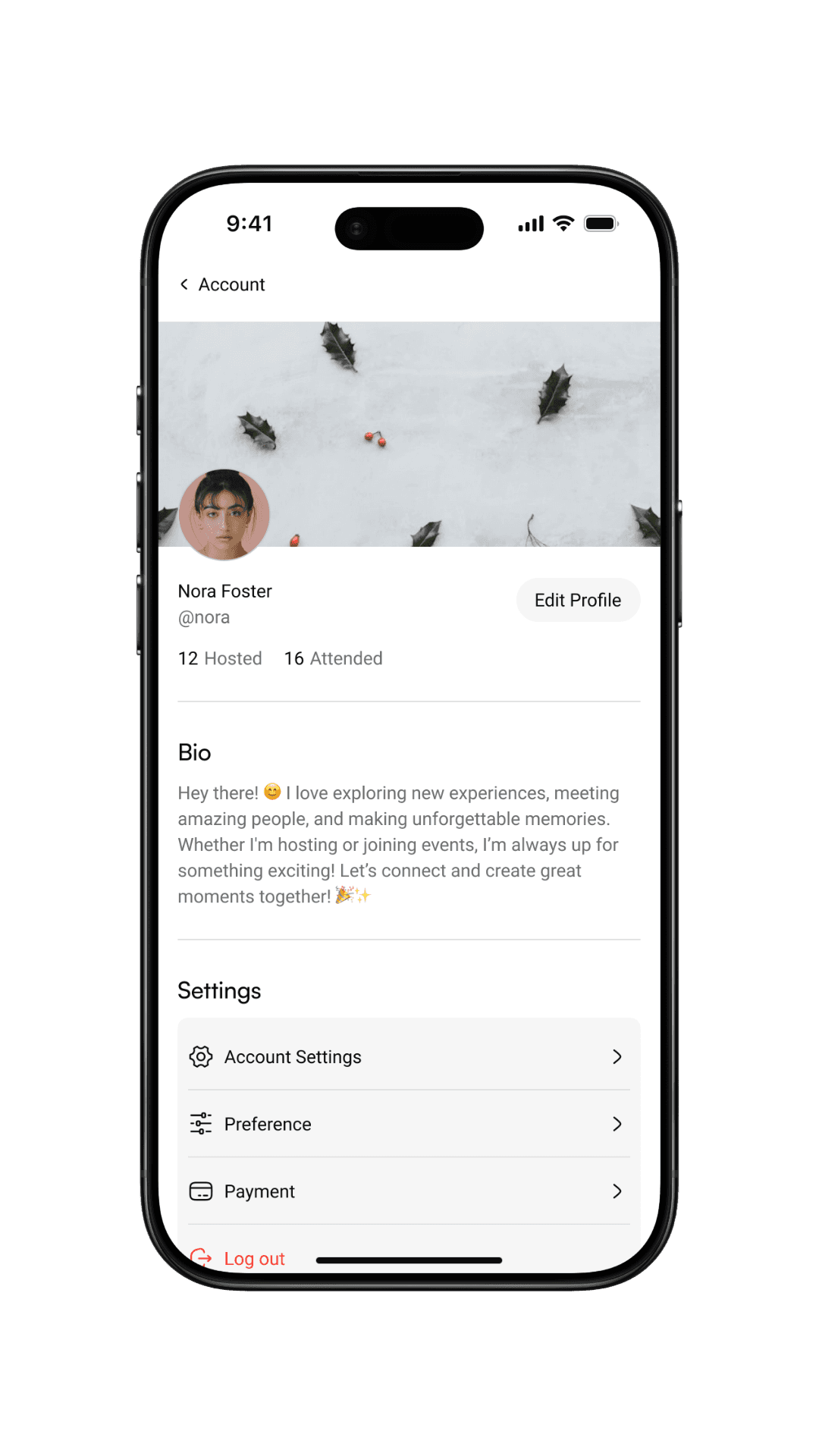
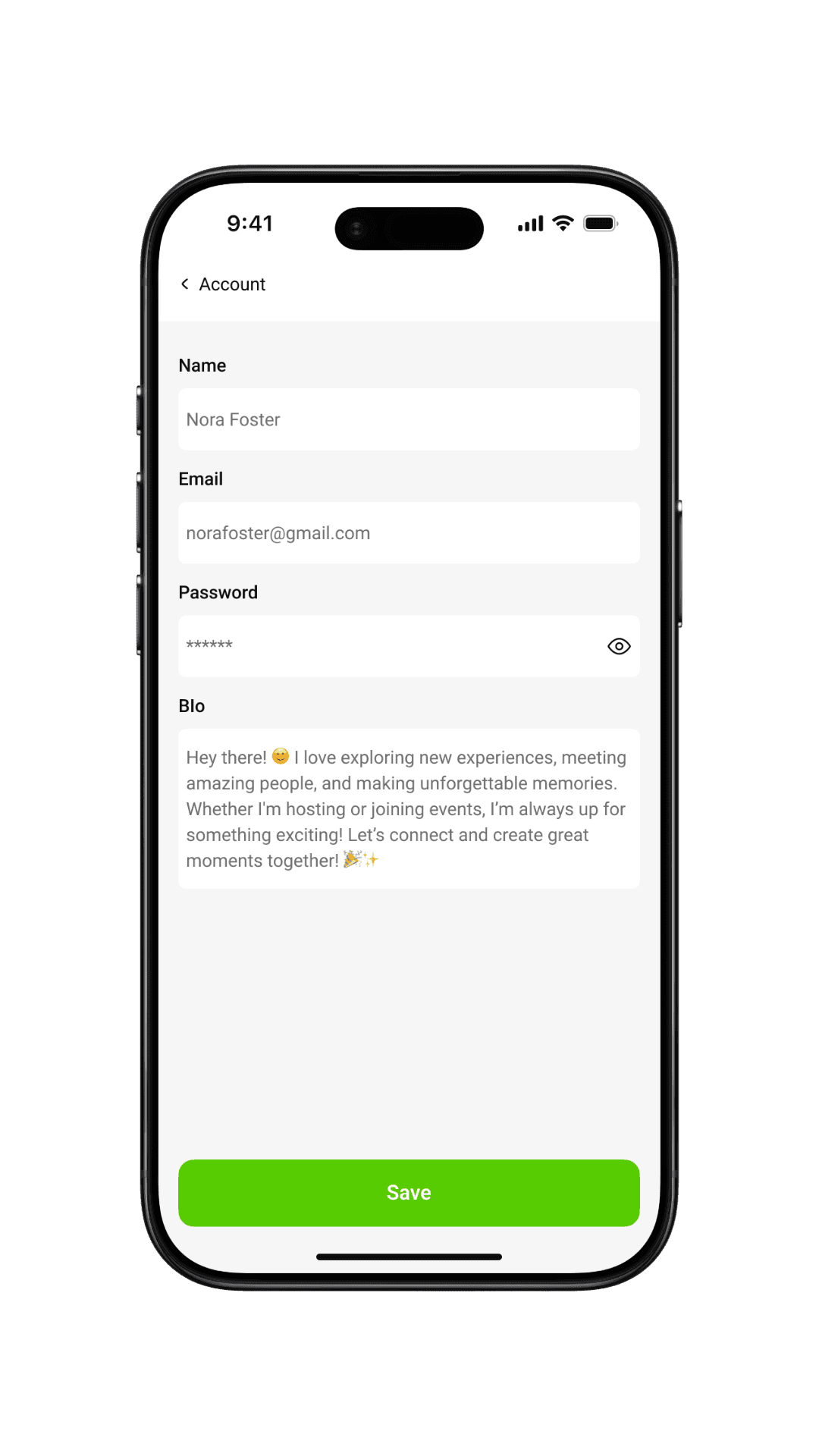
User account
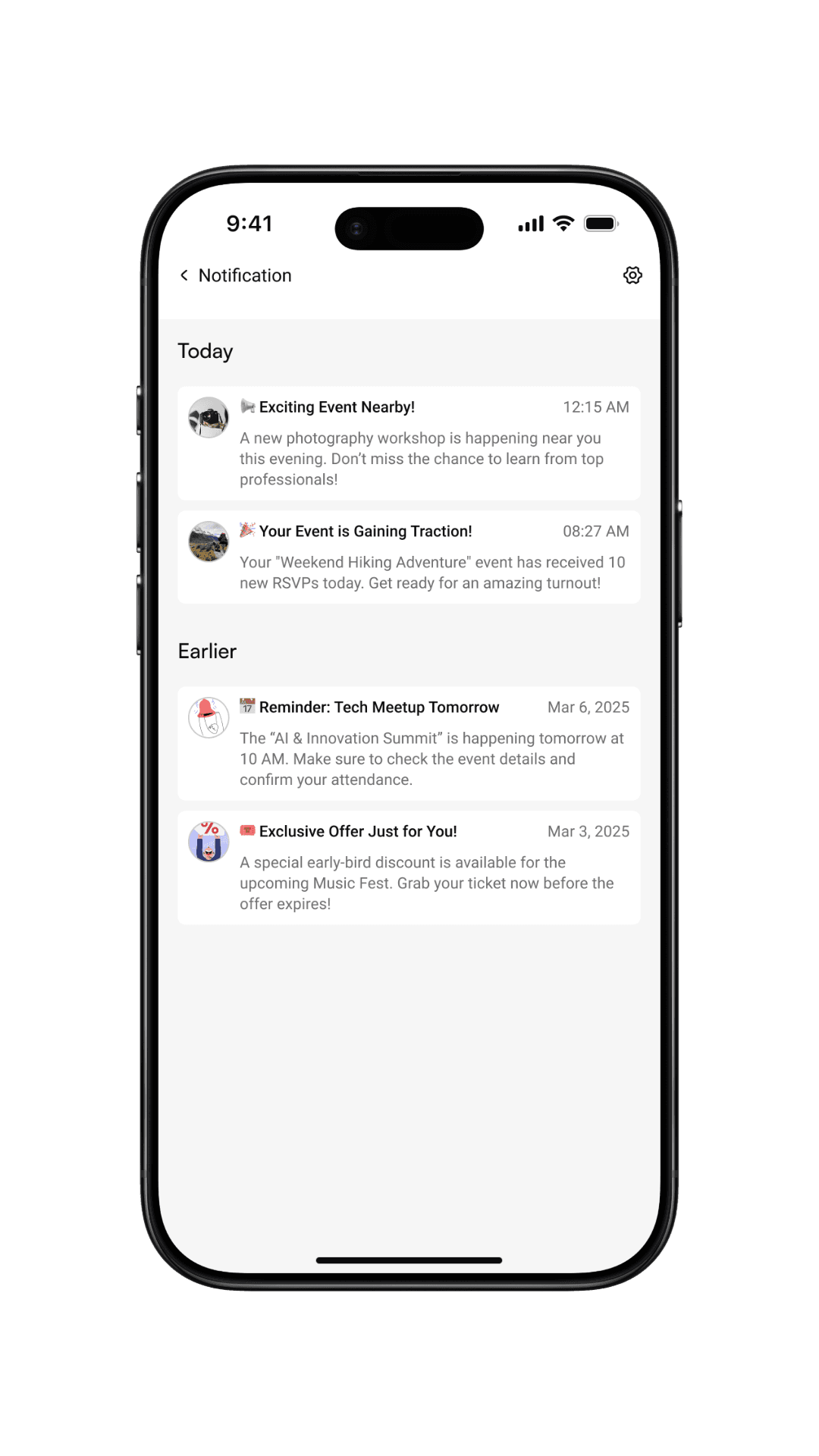
Centralized settings hub for profile management, payment methods, notification preferences, accessibility settings, privacy controls, and support access.
REFLECTION
EventSphere successfully addresses the critical visibility gap for small events through user-centered design and rigorous validation.
Key achievements:
Equal visibility algorithm for events of all sizes Intuitive mobile-first design optimized for one-handed use Built-in communication removing external platform dependency Accessibility-first approach with prominent indicators Comprehensive design system ready for development
The thorough research, iterative testing, and detailed documentation provide a solid foundation for development. EventSphere is positioned to serve an underserved market with 23% growth and clear competitive advantages over established platforms.
As a solo designer, this project demonstrated the value of disciplined process, comprehensive validation, and accessibility integration from the start. The learnings about mobile design patterns, thumb zone optimization, and platform-specific considerations will inform future work.
EventSphere aims to make every event discoverable and every gathering accessible. Through careful design and validation, this project takes meaningful steps toward that vision.